What makes a fidget toy good for adults specifically?
A good adult fidget toy is quiet, discreet, and desk-friendly. It calms your hands without making noise, drawing eyes, or looking like a kid’s party favor. For grown-ups, the bar is different than it is for a classroom. You’re fidgeting in meetings, on calls, on the train, at a desk a few feet from a colleague. The toy has to fit that world.
Three qualities do most of the work:
- Quiet. No clicks, no rattles, no snap. Silent motion is what lets you fidget in a room full of people without anyone noticing.
- Discreet. Small enough to live in a pocket or a palm. Muted or grown-up colors. Nothing that screams “toy.”
- Desk-friendly. It sits next to your keyboard, survives being grabbed forty times a day, and doesn’t roll off the table or leak.
A few more things matter once those are met: how it feels in the hand (some people want resistance, some want softness), how durable it is, and whether it’s easy to clean. The honest truth is that the “best” one is personal. Your nervous system has preferences, and the goal of this guide is to help you find yours, not to crown a single winner.
Do fidget toys actually work for anxiety and focus?
Fidget toys can genuinely help some adults feel calmer and more focused, but the evidence is mixed and still emerging, and they work as supportive tools rather than treatments. They give restless hands somewhere to go, and that small, repetitive motion can take the edge off tension or anchor a wandering mind. For many people, that’s real and useful.
Here’s the honest picture. Occupational therapists often note that repetitive, soothing hand movement can support self-regulation, and organizations like CHADD and ADDitude have long discussed fidgeting as one strategy some people with ADHD use to stay engaged. Research on sensory regulation suggests that tactile input can be grounding for certain nervous systems. At the same time, studies on fidget toys specifically are limited and don’t all point the same way. What helps one person can distract another.
So we’ll say it plainly: a fidget toy is not a cure, and it won’t fix anxiety. It’s a small, supportive tool that can make a hard moment a little more manageable. If you’re dealing with persistent anxiety, attention struggles, or anything that’s affecting your daily life, please talk to a doctor or mental-health professional. A squishy in your pocket is a lovely companion to real care, not a replacement for it.
What types of fidget toys are best for the office?
For the office, the best fidget toys are silent and visually quiet: sensory rings, mesh marble fidgets, soft squeeze balls, and small slow-rise squishies. They let you self-soothe through a long meeting or a hard email without a single click or anyone noticing. The enemy at work is noise and motion that pulls focus, yours or a colleague’s.
Good office picks share a profile. They move under the desk or in a closed hand. They don’t need a flat surface or two hands. They recover fast so you can set them down and pick them up between tasks.
A few that fit office life well:
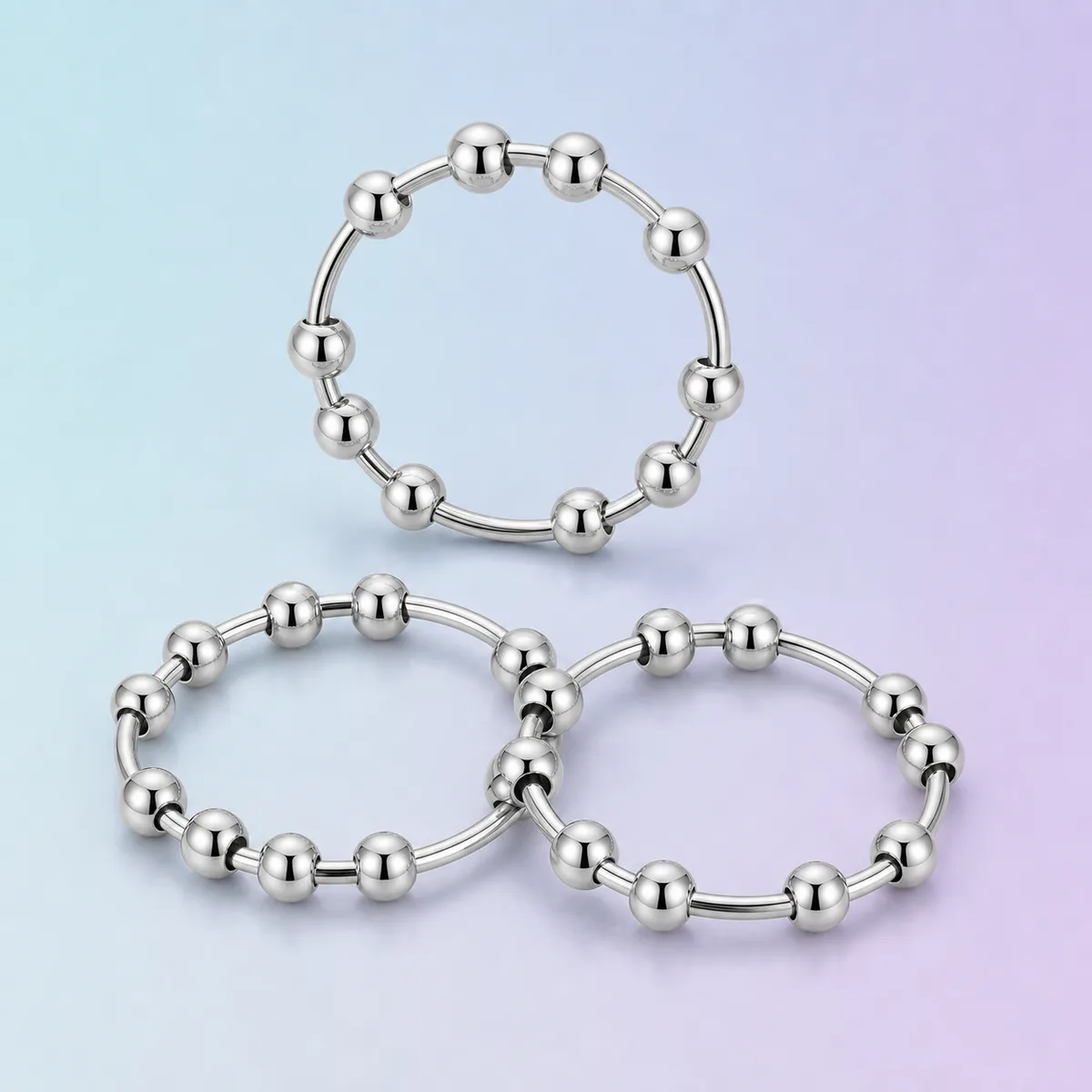
- Sensory rings: the Quiet Spinner Sensory Ring Set lives on your finger and spins silently. Nobody across the table can tell.
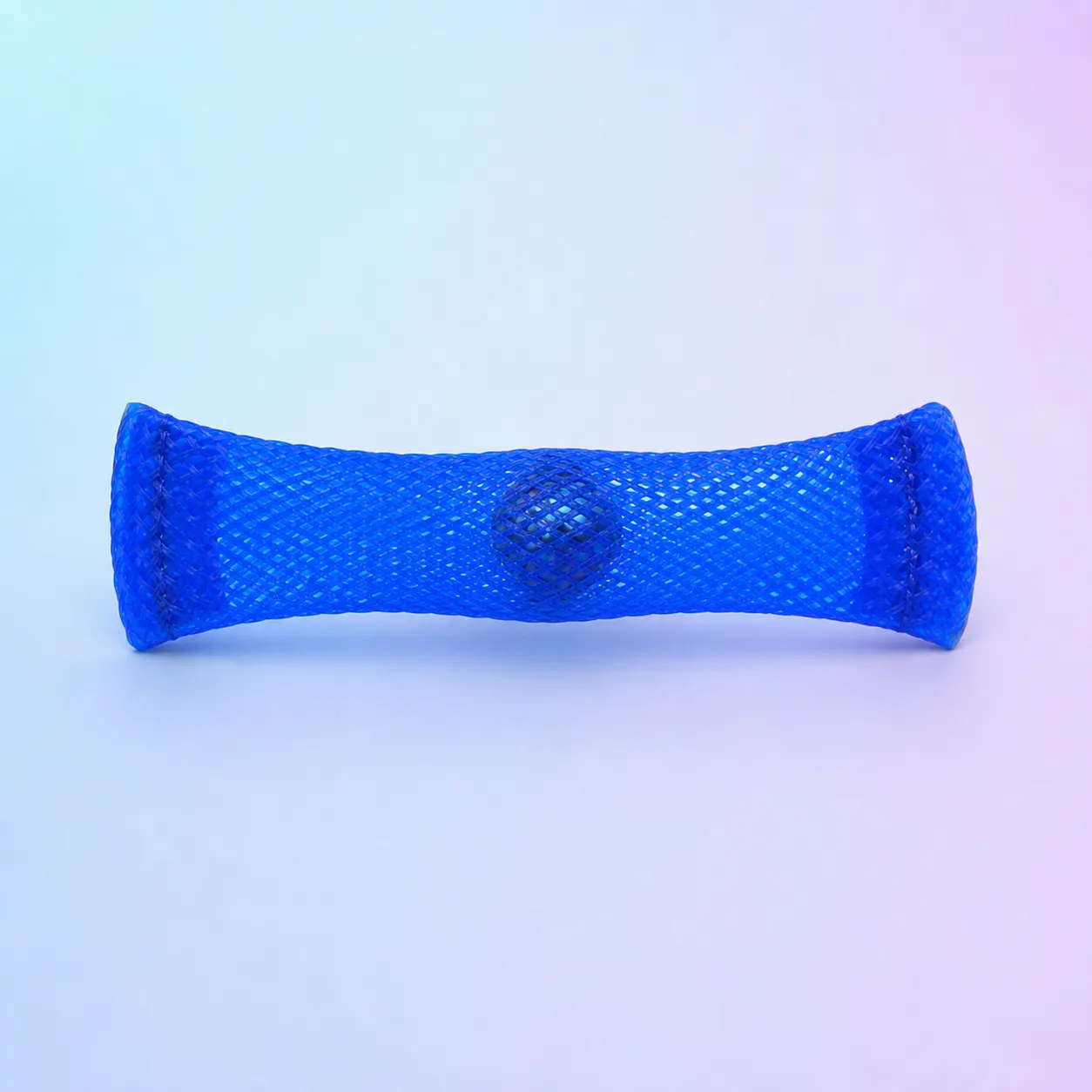
- Mesh marbles: the Roll & Squeeze Mesh Marble Fidget gives your fingers a satisfying push-and-roll with zero sound, ideal for meetings.
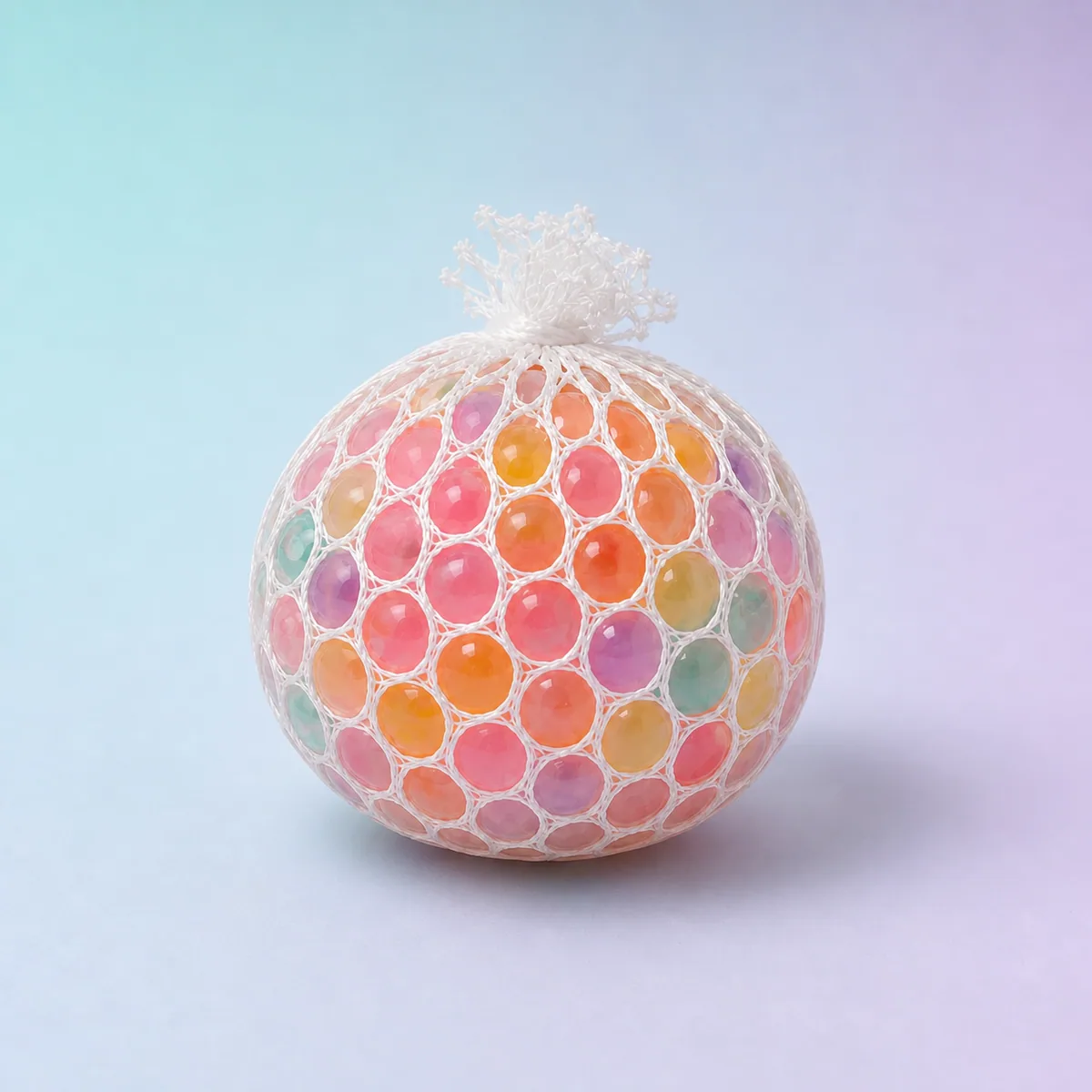
- Soft squeeze balls: the Calm Orb Water-Bead Squeeze Ball is quiet, grounding, and doubles as a gentle hand-strength break from typing.
- Small squishies: the Lumi Jellyfish Crystal Squishy sits on a desk looking more like a calm little object than a toy.
If your workplace is open-plan or quiet, lean toward the ring or the mesh marble. They’re the most invisible of the bunch.
Which fidget toys are most discreet and not childish?
The most discreet, grown-up fidget toys are sensory rings, mesh marbles, transparent crystal-look squishies, and muted squeeze balls: small, calm objects that read as accessories or desk pieces rather than toys. Discretion comes down to size, sound, and look, and the best adult options are deliberate about all three.
What makes something feel grown-up rather than childish:
- Restrained color and form. Clear, jewel-toned, or single-color pieces look intentional. The Lumi Jellyfish Crystal Squishy and the Jelly Blob Transparent Gel Fidget have a quiet, almost design-object quality.
- Wearable or pocketable. A ring you wear or a marble you palm draws no attention at all.
- No performance factor. Toys built for tricks and noise feel juvenile. Toys built for a calm, private moment feel mature.
If “won’t look childish” is your top priority, start with the Quiet Spinner Sensory Ring Set or the Roll & Squeeze Mesh Marble Fidget. Both disappear into ordinary adult life. The transparent squishies are a close second. They’re soft and playful in the hand but look serene on a desk.
What are the best fidget toys for adults with ADHD or sensory needs?
For adults with ADHD or sensory-seeking needs, the best fidget toys offer rich, repeatable input you can reach for without thinking: squeeze balls with texture, slow-rise squishies, mesh marbles, and ring sets that give your hands a constant, quiet job. Neurodivergent and sensory needs aren’t an afterthought here. They’re a first-class reason to fidget, and stimming is a healthy, valid way to regulate.
Different bodies want different things, so it helps to think in terms of the sensation you’re after:
- Seeking pressure or resistance? The Calm Orb Water-Bead Squeeze Ball and Bubble Grapes Squeeze Ball give satisfying push-back and a beady, tactile surface.
- Seeking slow, grounding texture? Slow-rise squishies like the Mochi Octopus or Shelly Sea Turtle reward a press-and-watch rhythm that can be deeply settling.
- Seeking constant fine-motor motion? The Quiet Spinner Sensory Ring Set and Roll & Squeeze Mesh Marble Fidget keep fingers busy without noise.
- Seeking visual input? The Jelly Blob Transparent Gel Fidget moves and catches light in a way that can be grounding to watch.
Organizations like CHADD and ADDitude describe fidgeting as one of many strategies some people use to stay regulated and engaged. It won’t work for everyone, and it’s not a substitute for the support, structure, or treatment that helps you. Think of these as one more friendly tool in the kit.
How do I choose the right fidget toy for me?
Choose a fidget toy by answering three quick questions: where will you use it, what sensation does your body want, and how quiet does it need to be? Match those answers to a category, and you’ve narrowed twelve options down to two or three. Your hands will sort out the final pick faster than your head will.
Start with where. An open office or quiet meeting needs silent, invisible motion: rings, mesh marbles, soft squeeze. Home or commuting gives you more freedom for squishies you can press and watch.
Then what your body wants:
- Tension to release → squeeze
- Restlessness to settle → slow-rise squishy
- A mind to anchor → ring or mesh marble
- Something to watch → gel or jellyfish
Then sound tolerance: when in doubt, go quieter than you think you need.
Here’s a simple way to see the categories side by side:
| Fidget type | Best for | Where it shines | Sound | Our pick |
|---|---|---|---|---|
| Squeeze ball | Releasing tension, hand strength | Desk, calls, nail-biting moments | Quiet | Calm Orb Water-Bead Squeeze Ball |
| Slow-rise squishy | Grounding, sleep wind-down | Home, evenings, nightstand | Silent | Mochi Octopus Slow-Rise Squishy |
| Sensory ring | Discreet focus | Meetings, open offices | Silent | Quiet Spinner Sensory Ring Set |
| Mesh marble | Silent focus, busy fingers | Meetings, commuting | Silent | Roll & Squeeze Mesh Marble Fidget |
| Gel / jellyfish | Visual grounding | Desk, focus, wind-down | Silent | Jelly Blob Transparent Gel Fidget |
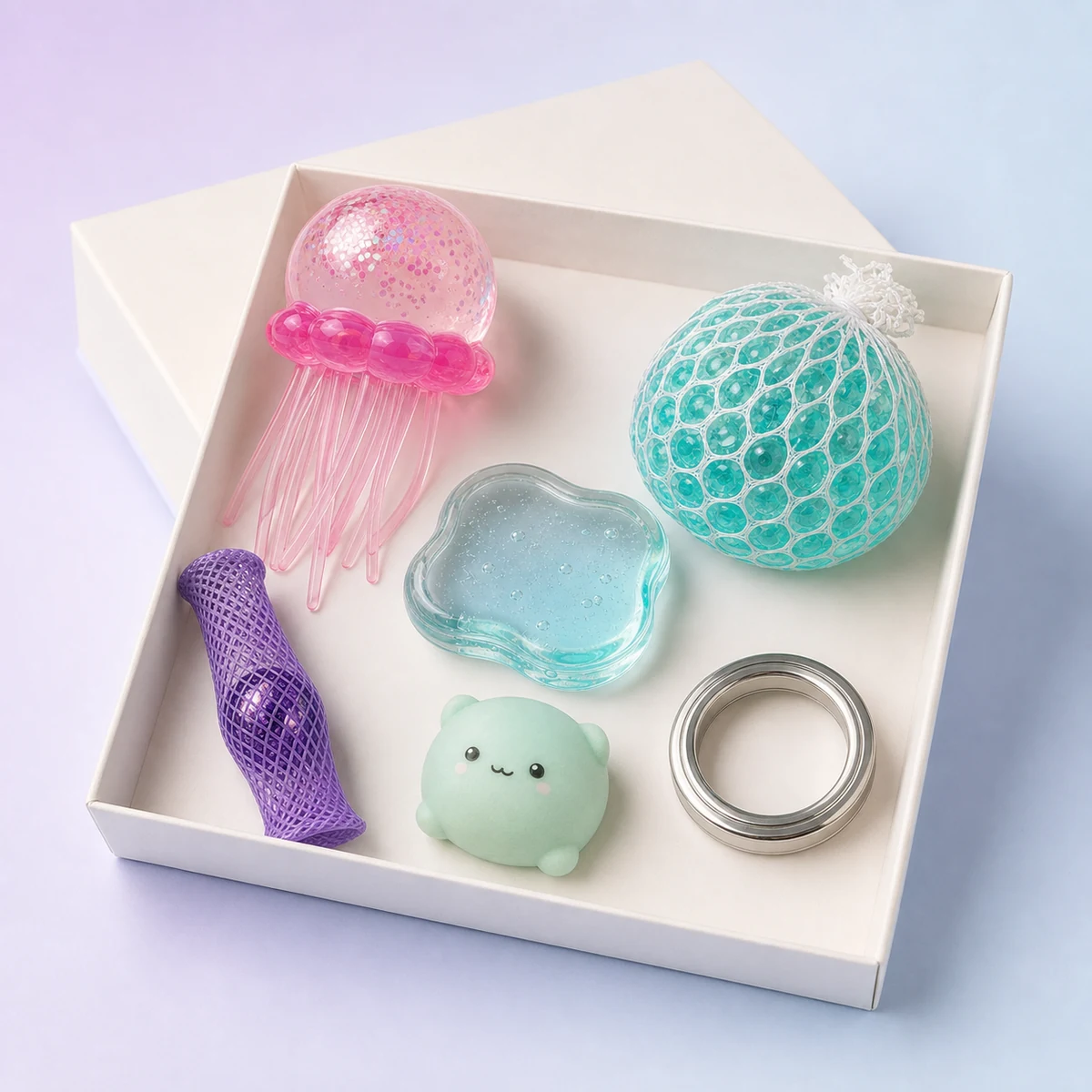
| Variety kit | Not sure yet | Anywhere | Mostly silent | The Calm Starter Bundle |
If you genuinely don’t know where to start, that’s not a problem. It’s normal. The Calm Starter Bundle exists for exactly this. Try a few, keep the one your hands keep reaching for, and gift the rest.
What are the best fidget toys for winding down and sleep?
For winding down and sleep, the best fidget toys are soft, slow, and silent: slow-rise squishies and gently weighted squeeze balls that ask your hands to move slowly and let your body follow. The goal at night isn’t stimulation; it’s a quiet, repetitive motion that signals it’s time to downshift.
Slow-rise squishies are made for this. You press, and the toy takes its time recovering. That unhurried rebound naturally slows your hands, and a slow press-and-watch rhythm can be a small ritual before bed:
- Drift Jellyfish Glitter Squishy: a soft, drifting glitter motion that’s calming to handle and to look at as you wind down.
- Bun Buddy Panda Slow-Rise Squishy: cozy, rounded, and pleasant to hold while you let the day go.
- Shelly Sea Turtle Slow-Rise Squishy: gentle and grounding, an easy nightstand companion.
Keep one within reach of your bed. The point isn’t to play; it’s to give restless hands somewhere soft to land while the rest of you settles. As always, if sleep is a real struggle, a squishy is a kind helper but not a treatment. A clinician can help with the bigger picture.
Sources & further reading
We reference trusted organizations by name. This article is informational and not a substitute for professional medical advice.
- CHADD: Offers widely cited resources on ADHD, where fidgeting is sometimes discussed as one self-regulation strategy among many.
- ADDitude: Publishes practitioner-informed articles on ADHD and focus that reference fidgeting as a tool some people find helpful.
- American Occupational Therapy Association: Occupational therapists often discuss sensory input and self-regulation, the broader framework fidget tools fit within.
- Child Mind Institute: Provides accessible mental-health information and context on sensory and attention-related needs.
Frequently asked questions
Are fidget toys for adults actually different from kids' fidget toys?
Often, yes. Adult-oriented fidget toys lean quiet, discreet, and grown-up in appearance (sensory rings, mesh marbles, and muted or crystal-look squishies), so they fit offices, meetings, and commutes. Kids' versions tend to prioritize bright color, noise, and play. The mechanics can overlap, but the design priorities differ.
Can I use a fidget toy at work without it being distracting?
Yes, if you choose a silent one. Sensory rings, mesh marble fidgets, and soft squeeze balls move with no clicks or rattles and stay hidden in a hand or pocket, so they won't pull focus from you or your colleagues. Save clicky or spinning toys with sound for home or your commute.
Will a fidget toy cure my anxiety or ADHD?
No. Fidget toys are supportive tools, not medical treatment, and the evidence on them is mixed and still emerging. They can make a tense or restless moment more manageable for some people, but they don't replace therapy, medication, or a clinician's care. If anxiety or attention is affecting your daily life, please reach out to a professional.
How do I keep a fidget toy clean?
For most squeeze balls and squishies, wipe gently with a slightly damp cloth and a little mild soap, then let it air-dry fully before squeezing again. Avoid soaking, harsh cleaners, and heat. Rings and mesh marbles can usually be wiped down the same way. When in doubt, gentle and dry-after is the safe rule.
What if I don't know which type I'll like?
That's common, and the easy fix is a small variety kit. The Calm Starter Bundle lets you try several textures and motions so your hands can tell you what they prefer before you settle on a favorite. Keep the one you reach for most, and the others make genuinely nice little gifts.