Do fidget toys actually help with anxiety?
For some people, yes, and the honest answer is that it depends on the person. Fidget toys can take the edge off anxious, restless energy by giving your hands a calm, repetitive task. They are a supportive tool that helps many people self-soothe, not a medical treatment or a guaranteed fix.
We want to be straight with you, because this is the question everyone is really asking. The research on fidget toys and anxiety is mixed and still emerging. Some studies show clear benefits for focus and calm. Others show modest or inconsistent results, partly because “fidgeting” covers everything from a quiet squeeze ball to a noisy clicking gadget, and partly because anxiety looks different in every body.
What we can say with confidence is this. Plenty of people find that holding something soft and squeezable makes an anxious moment a little more bearable. That counts. You do not need a peer-reviewed certainty to notice that your shoulders drop when your hands have something gentle to do. A fidget toy is best understood as a small, friendly companion for hard moments, not as a treatment plan.
How do fidget toys work to calm anxiety?
Fidget toys are thought to work in three gentle ways. They redirect nervous energy into a small physical action, they offer tactile grounding through touch and pressure, and they give your attention a soft anchor. Together, these can nudge an overstimulated nervous system toward settling, even if only a little.
Think about what anxiety actually feels like in the body. Restlessness. A jittery need to move. A mind that races ahead. A fidget toy meets that energy where it lives, in the hands, and gives it somewhere harmless to go.
Here is the simple version of what may be happening:
- Redirecting nervous energy. Anxious energy wants an outlet. Squeezing, rolling, or slow-pressing a toy channels that restlessness into a repetitive motion instead of nail-biting, leg-bouncing, or spiraling thoughts.
- Tactile grounding. Touch is a fast, direct line to the present moment. The texture of a squishy, the cool surface of a gel blob, the resistance of a water-bead ball, all of it pulls your attention out of your head and back into your hands.
- A gentle focus anchor. A small, predictable, low-stakes task occupies just enough of your mind to interrupt a worry loop, the way doodling can quiet a busy meeting brain.
None of this is magic, and we would never pretend it is. But it is a real, plausible mechanism, and it lines up with how sensory-regulation tools are used in occupational therapy every day.
What does the research say about fidget toys and anxiety?
The research is mixed but cautiously promising, and it is honest to say the science is still catching up to everyday experience. Some studies link fidgeting and sensory tools to improved focus and reduced stress. Others find small or inconsistent effects. Most experts treat fidget toys as helpful supports rather than proven clinical interventions.
We think you deserve the real picture, not marketing certainty. Here is how to hold the evidence:
- The findings are not uniform. “Fidget toy” is a huge, fuzzy category, so studies often measure very different objects and outcomes. That makes tidy conclusions hard.
- Practitioners often see benefit anyway. Occupational therapists and sensory-integration practitioners frequently describe fidget and sensory tools as useful for self-regulation. Organizations like CHADD and ADDitude often discuss fidgeting as a legitimate strategy for focus and restlessness, and the American Occupational Therapy Association recognizes sensory tools within broader self-regulation approaches.
- The mechanism is well-grounded even where outcomes vary. Research on sensory regulation and grounding techniques supports the general idea that touch and repetitive movement can help some people manage stress.
A fair summary: emerging, imperfect evidence, plus a lot of credible real-world support. That is enough to make a fidget toy worth trying, and not enough to call it a treatment. Both things are true at once.
Are fidget toys especially helpful for ADHD, autism, and sensory needs?
Often, yes. For many neurodivergent and sensory-seeking people, fidget toys are not a novelty but a genuine self-regulation tool. They can provide steady sensory input that helps with focus, restlessness, and overwhelm. We treat neurodivergent and sensory needs as a first-class reason to fidget, not an afterthought.
If your brain craves movement or sensory input to feel settled, a fidget toy is simply meeting a real need. There is nothing to apologize for in that.
Why these tools tend to fit so well:
- Sensory seeking. Some nervous systems regulate better with consistent input. A squishy or a textured ring offers that input quietly and on demand.
- Focus support. For some people with ADHD, a small background motion frees up attention rather than splitting it. Groups like CHADD and ADDitude often describe this as a recognized strategy.
- Self-soothing during overwhelm. A predictable, repetitive texture can be grounding when the world feels like too much.
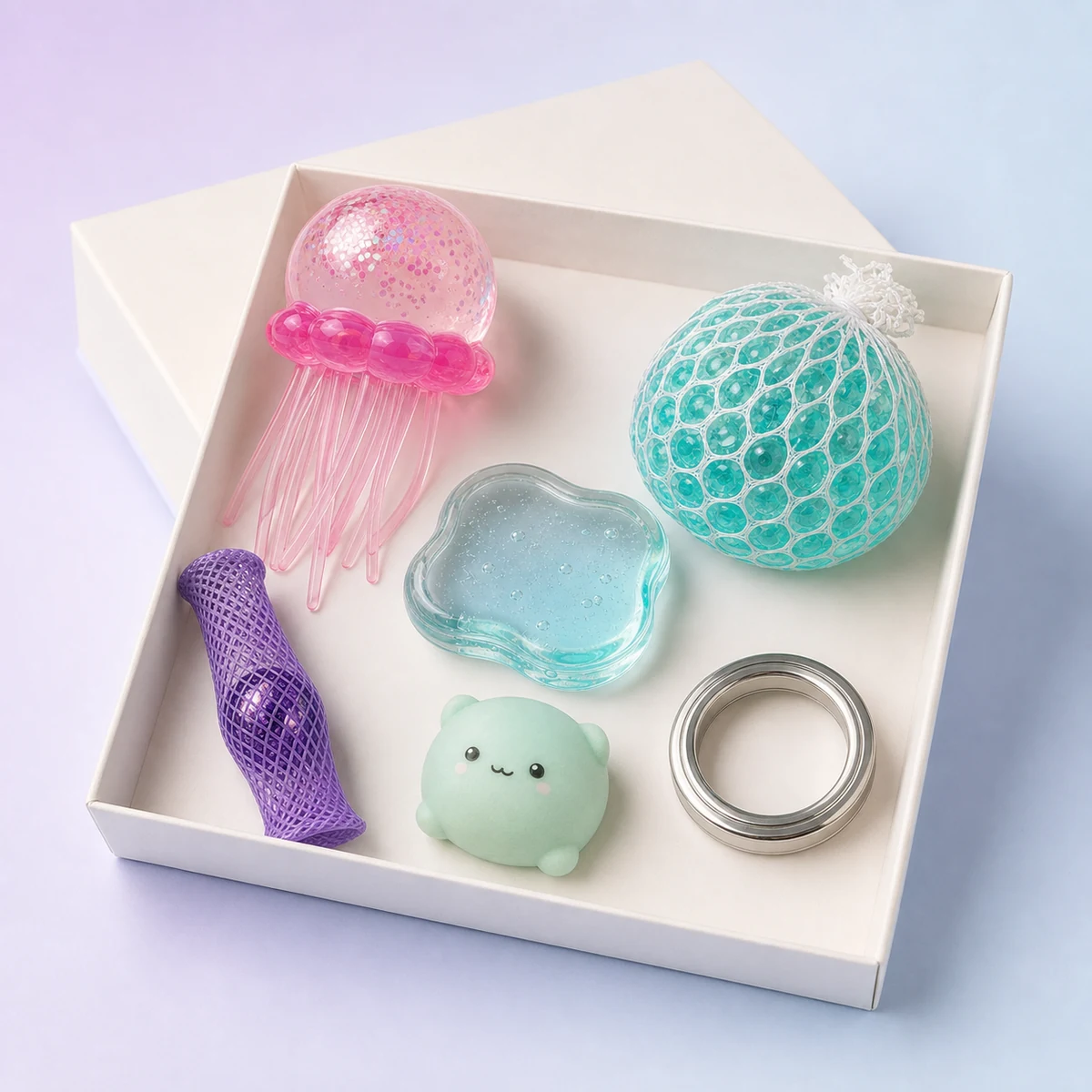
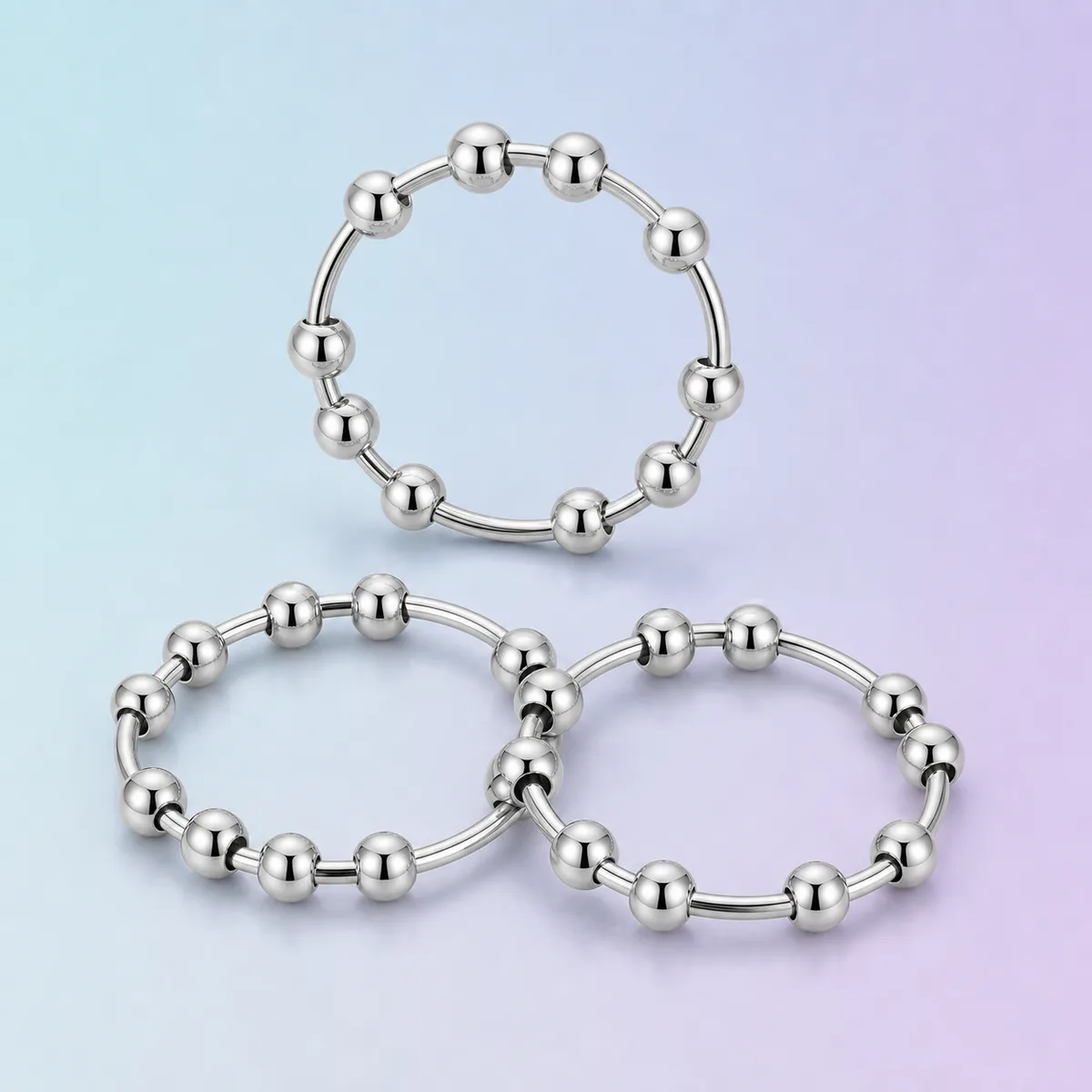
- Discreet by design. Quiet options like the Quiet Spinner Sensory Ring Set or the Roll & Squeeze Mesh Marble Fidget let you self-regulate in a classroom, office, or meeting without drawing attention.
If you are autistic, ADHD, or otherwise sensory-seeking, you do not need permission to use a tool that helps. You are allowed to be comfortable.
What kind of fidget toy is best for anxiety?
For anxiety, the calmest toys tend to win. Quiet, soft, repetitive options like slow-rising squishies, squeeze balls, gel blobs, and textured rings suit anxious moments better than loud, fast, or visually busy gadgets. The goal is to soothe your nervous system, not stimulate it further.
When you are anxious, more noise and more stimulation usually backfire. Reach for tactile and slow instead. Here is a simple way to match a toy to the moment:
| If you tend to… | Look for… | A gentle pick |
|---|---|---|
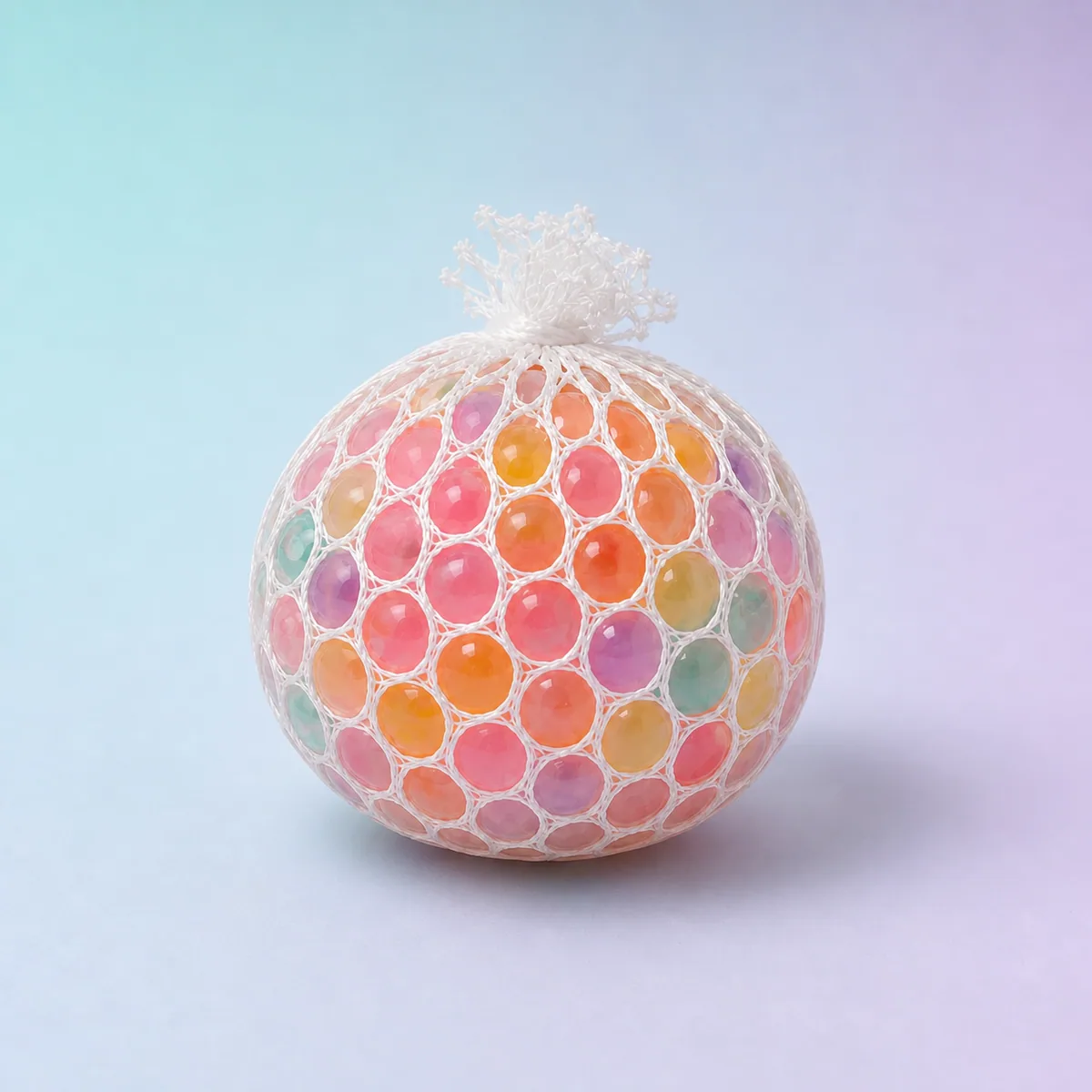
| Squeeze and clench when stressed | A soft, resistant ball | Calm Orb Water-Bead Squeeze Ball, Bubble Grapes Squeeze Ball |
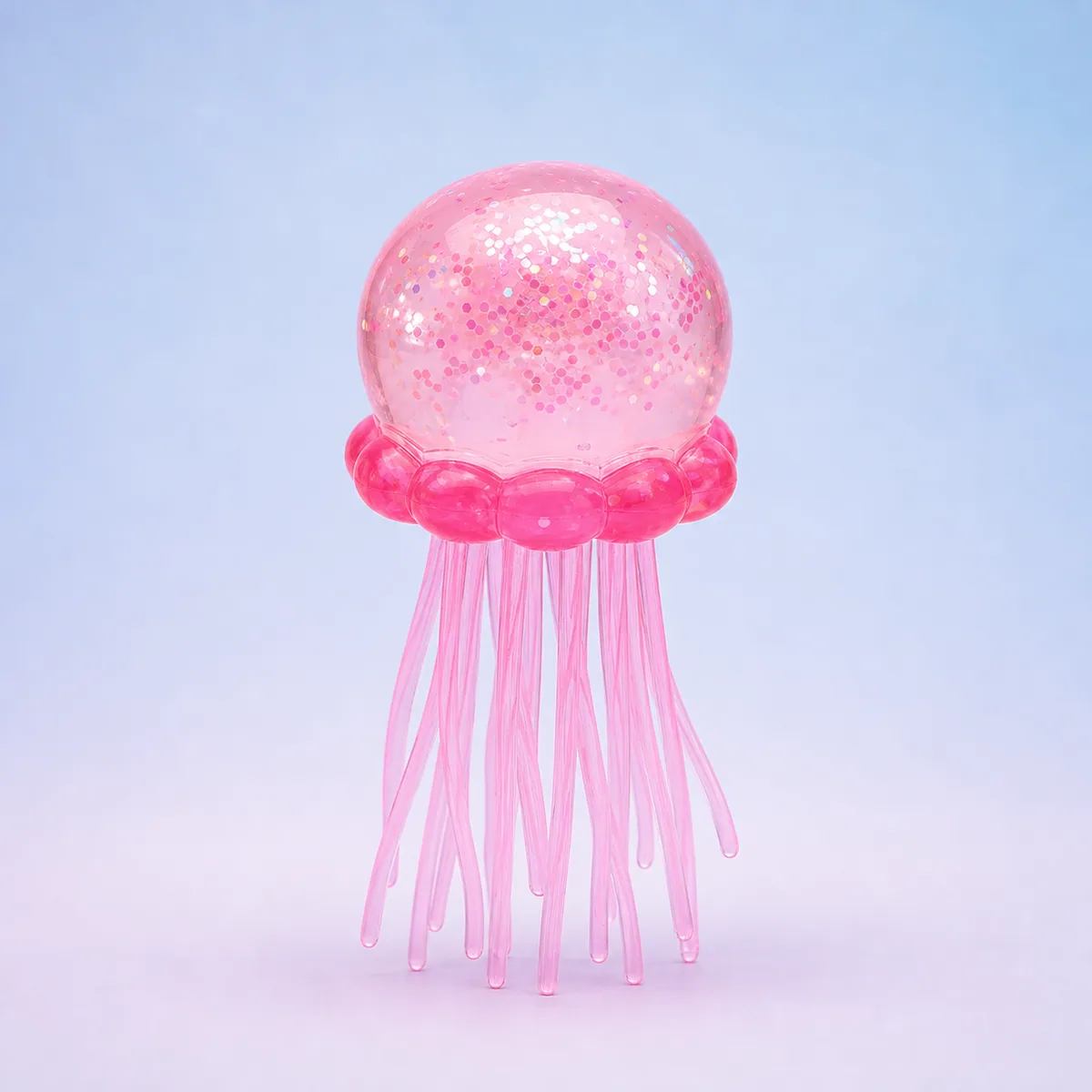
| Need slow, repetitive motion | A slow-rising squishy | Drift Jellyfish Glitter Squishy, Shelly Sea Turtle Slow-Rise Squishy |
| Fidget discreetly at work | A quiet, pocket-sized tool | Quiet Spinner Sensory Ring Set, Roll & Squeeze Mesh Marble Fidget |
| Calm down through your eyes and hands | A visual, squishable gel | Jelly Blob Transparent Gel Fidget, Lumi Jellyfish Crystal Squishy |
| Wind down before sleep | Something soft and slow | Bun Buddy Panda Slow-Rise Squishy, Mochi Octopus Slow-Rise Squishy |
| Not sure where to start | A small variety to explore | The Calm Starter Bundle |
There is no single right answer. The best fidget toy is the one your hands keep reaching for. If you are unsure, a small sampler like the Calm Starter Bundle lets you find your favorite without overthinking it, and the full range of soft, quiet options lives in our anxiety relief collection.
How do I actually use a fidget toy to ease anxiety?
Keep it simple and keep it close. Hold your toy, slow your hands, and let the repetitive motion pace your breathing. Pair it with a grounding habit, like naming five things you can see, and use it before anxiety peaks, not only after. Consistency matters more than technique.
A few calm, low-effort ways to get the most from yours:
- Match the motion to your breath. Squeeze on the inhale, release on the exhale. Let the toy set an unhurried rhythm.
- Pair it with grounding. Combine the texture in your hand with a quick 5-4-3-2-1 senses check to anchor yourself in the room.
- Use it early. A fidget toy works best as a steady companion, not an emergency brake. Reaching for it before a meeting or a hard conversation often helps more than waiting for panic.
- Keep one where anxiety lives. Your desk, your bag, your nightstand. The easiest tool to use is the one within reach.
- Let it be quiet. You do not have to do it “right.” Sometimes just holding something soft is the whole practice.
Be patient with yourself. Some days it helps a lot, some days a little. Both are fine.
When should I see a professional instead of relying on a fidget toy?
A fidget toy is a comfort, not a cure, so reach out for professional support when anxiety is persistent, intense, or interfering with daily life. If worry disrupts your sleep, work, relationships, or sense of safety, please talk to a doctor or therapist. A toy can sit beside real care, but it should never replace it.
We say this with warmth, because we mean it. Fidget toys are wonderful for everyday stress, restless hands, and taking the edge off a hard moment. They are not designed to treat an anxiety disorder, panic attacks, or anything that feels bigger than a passing wave.
Consider reaching out for support if you notice:
- Anxiety that lasts most days for weeks or longer
- Worry that interferes with sleep, eating, work, or relationships
- Panic attacks, or avoiding places and activities you used to enjoy
- A feeling that things are unmanageable on your own
Trusted organizations like the NHS, the CDC, the Child Mind Institute, and the Anxiety and Depression Association of America offer guidance on when and how to seek help. There is real strength in asking. A fidget toy can be a small, steady friend along the way, calm in the palm of your hand, while the deeper support comes from people trained to help.
Sources & further reading
We reference trusted organizations by name. This article is informational and not a substitute for professional medical advice.
- CHADD: Discusses fidgeting and sensory strategies as recognized approaches for managing restlessness and supporting focus, particularly for ADHD.
- ADDitude: Covers fidget tools and movement as practical self-regulation strategies for focus and restlessness in neurodivergent people.
- American Occupational Therapy Association: Recognizes sensory tools within broader self-regulation and sensory-integration approaches used by occupational therapists.
- Child Mind Institute: Provides guidance on childhood and adolescent anxiety and when to seek professional support.
- NHS: Offers public guidance on recognizing anxiety and knowing when to seek help from a healthcare professional.
- CDC: Provides general public-health information on anxiety, mental health, and accessing care.
- Anxiety and Depression Association of America: Offers resources on anxiety disorders and guidance on when professional treatment is appropriate.
Frequently asked questions
Do fidget toys really help with anxiety, or is it a placebo?
For many people they offer real, if modest, relief by redirecting nervous energy and grounding attention through touch. Some of the benefit may come from expectation, but a calmer body is a calmer body. The evidence is mixed but promising, and a fidget toy is a supportive tool rather than a cure.
What is the best fidget toy for anxiety specifically?
Quiet, soft, repetitive toys tend to suit anxiety best, since they soothe rather than stimulate. Slow-rising squishies, squeeze balls, gel blobs, and textured rings are popular calming choices. If you are unsure, a small sampler like the Calm Starter Bundle lets you discover which texture and motion your hands reach for most.
Are fidget toys good for ADHD and autism, or just anxiety?
They are often genuinely helpful for ADHD, autism, and sensory needs, not just anxiety. Many neurodivergent people use fidget toys as a real self-regulation tool that supports focus and eases overwhelm. Discreet options like sensory rings or mesh marble fidgets work well in classrooms, offices, and meetings.
Can a fidget toy replace therapy or medication for anxiety?
No. A fidget toy is a comfort and a coping aid, not a treatment. It can sit beside professional care, but it cannot replace it. If your anxiety is persistent, intense, or interfering with daily life, please talk to a doctor or therapist. Trusted health organizations offer guidance on when to seek support.
How do I use a fidget toy to calm down in the moment?
Hold it, slow your hands, and let the repetitive motion pace your breathing, squeezing on the inhale and releasing on the exhale. Pair it with a quick grounding check, like naming five things you can see. Using it early, before anxiety peaks, tends to help more than waiting for the hard moment to arrive.