What should you think about first when choosing a fidget toy?
Think about the need first, not the toy. Ask yourself what you want the fidget to help with right now: calming down, focusing, or staying alert. The need points you toward the right texture, motion, and noise level. Everything else is detail.
It’s tempting to start with the cutest squishy or the cleverest gadget. We get it. But a toy chosen for looks can sit unused in a drawer, while a plain one that matches your actual need becomes the thing you reach for every day.
So before you browse, name the moment you’re shopping for. Are you trying to settle a racing mind at bedtime? Stay anchored during a long meeting? Keep your hands busy so they stop reaching for your phone? Each of those moments has a different shape, and a different toy tends to fit it.
Throughout this guide, we’ll use four simple questions. Need, motion, noise, and who it’s for. Answer those, and the choice mostly makes itself. If you’d rather skip the thinking, our fidget finder walks you through the same questions and suggests a match.
How do you match a fidget toy to your need: calm, focus, or stay awake?
Match the toy to the job. For calming down, choose slow, repetitive, low-stimulation inputs like a soft squeeze or a slow-rising squishy. For focus, choose quiet, contained motion that occupies your hands without pulling your eyes away. For staying alert, choose a little more sensation: texture, resistance, or gentle clicking.
These three needs feel different in the body, so they ask for different things.
Calming down is about slowing the system. Inputs that are soft, predictable, and unhurried tend to help. A squishy that takes a few seconds to rise back into shape gives you something steady to watch and feel. There’s no goal, no score, nothing to win. That’s the point.
Focus is about giving the restless part of you a quiet job so the rest of you can think. Here you want motion that’s almost automatic, something your fingers can do without looking. Rolling, light squeezing, or turning a ring works well because your eyes stay on your work.
Staying alert, like during a long lecture or a sleepy afternoon, asks for a touch more input. A firmer texture, a bit of resistance, or a small repeating click can keep your nervous system pleasantly occupied without becoming a distraction.
One honest note. These are starting points, not rules. You might find that a crunchy texture calms you while a soft one bores you. Your body gets the final say, and that’s completely normal.
Which fidget texture and motion is right for you (squeeze, stretch, roll, or spin)?
Pick the motion your hands naturally want to do. Squeezing suits people who carry tension in their grip. Stretching and slow-rise suit those who like to watch something change. Rolling suits quiet, repetitive focus. Spinning and clicking suit anyone who craves a bit more sensory input. Texture matters as much as motion.
The motion is half the experience. The texture is the other half. A squeeze ball that’s too firm can feel like a stress test instead of a comfort, and a squishy that’s too soft might not give you enough to push against. Preference here is deeply personal.
Here’s a quick way to map common motions to common needs and to a few of our pieces.
| Motion | Feels like | Best for | Try |
|---|---|---|---|
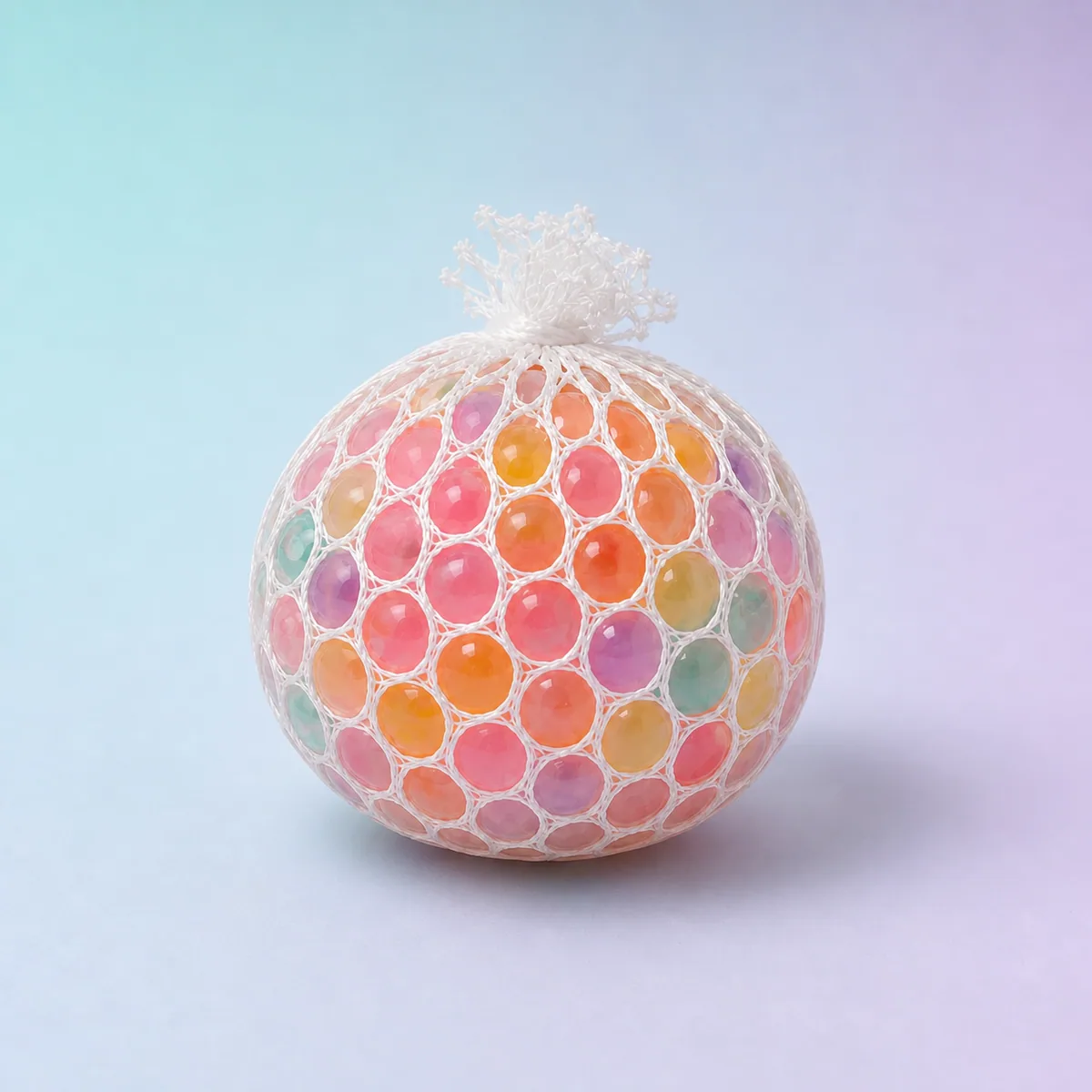
| Squeeze | Releasing held tension | Calm, nail-biting, hand strength | Calm Orb Water-Bead Squeeze Ball, Bubble Grapes Squeeze Ball |
| Slow-rise / press | Watching something breathe back | Calm, sleep wind-down | Drift Jellyfish Glitter Squishy, Shelly Sea Turtle Slow-Rise Squishy, Bun Buddy Panda Slow-Rise Squishy |
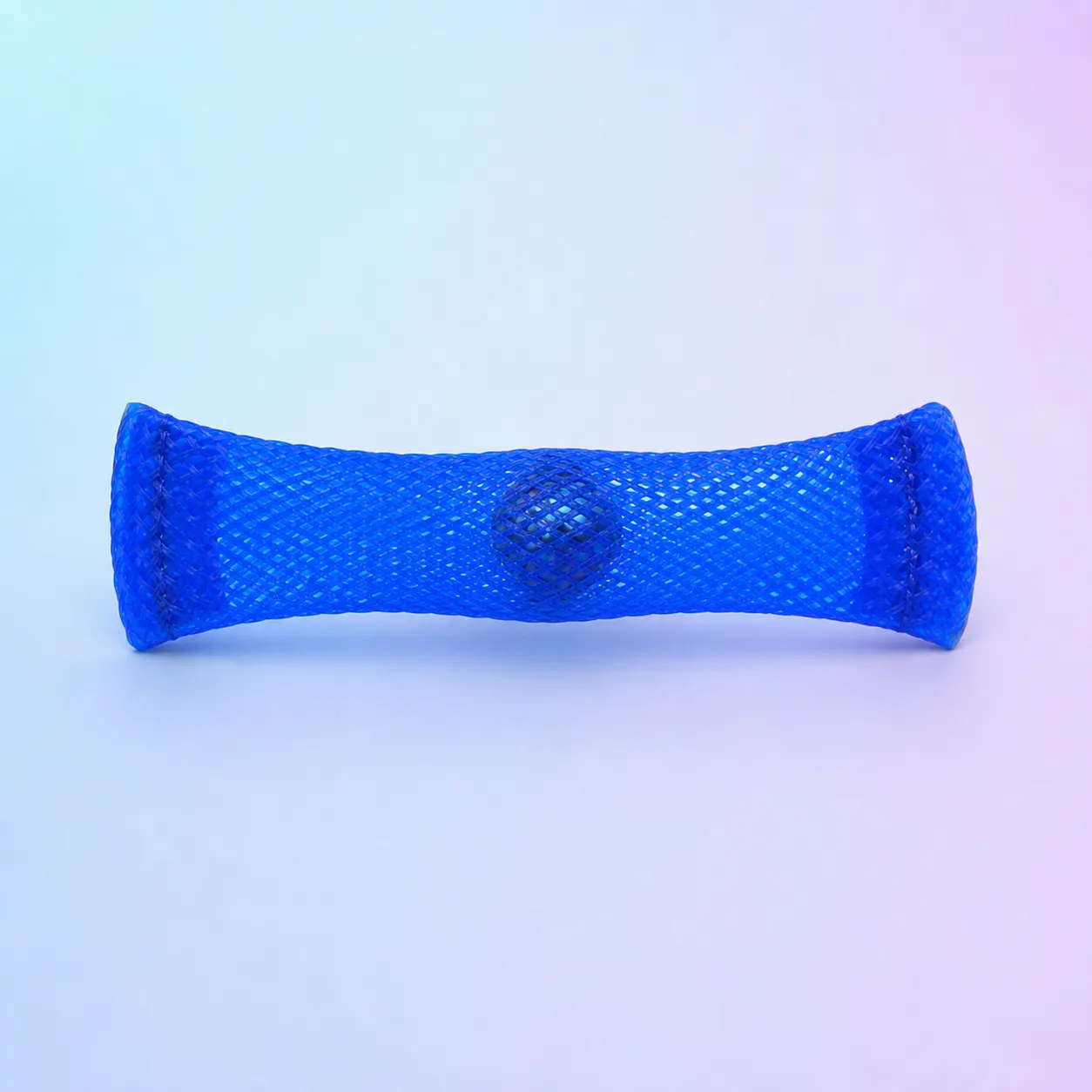
| Roll | Quiet, automatic motion | Silent focus, meetings | Roll & Squeeze Mesh Marble Fidget |
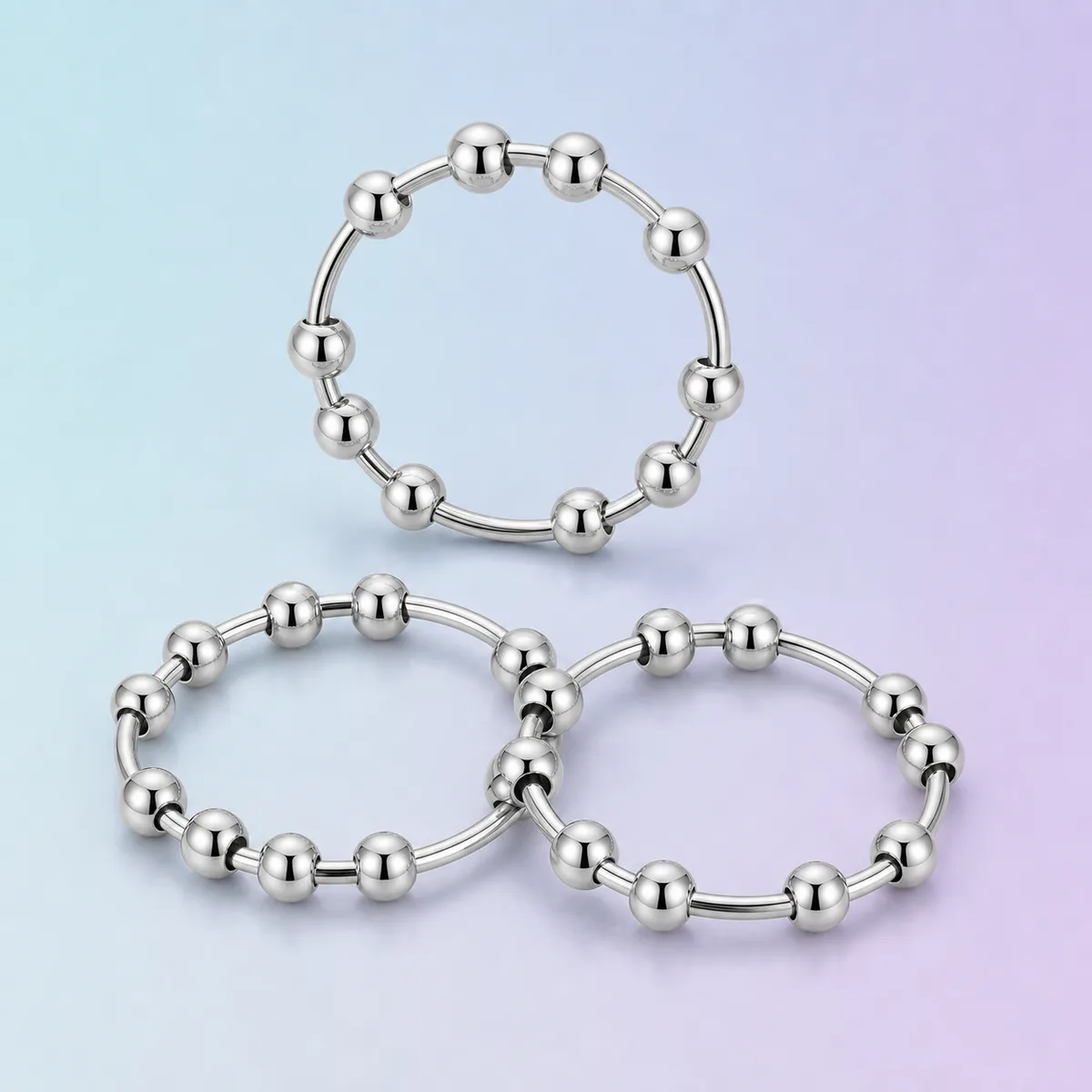
| Spin / turn | Discreet, repeating loop | Office focus, anxiety | Quiet Spinner Sensory Ring Set |
| Squish / morph | Visual, grounding sensation | Sensory input, focus | Jelly Blob Transparent Gel Fidget, Mochi Octopus Slow-Rise Squishy |
If you’re sensory-seeking, you may gravitate toward the grippy, the squishy, and the visually busy, like glitter suspended in gel or a blob that changes shape in your palm. If you’re sensory-avoiding, plainer and softer is often kinder. Both are valid. Neither is the right way to fidget.
How much noise should a fidget toy make for your setting?
As quiet as your setting demands. In a classroom, open office, library, or meeting, choose silent tools like mesh marbles, fidget rings, or gel blobs. At home, alone, noise doesn’t matter, so anything goes. Noise is the most common reason a fidget toy gets put away, so check it before you buy.
A clicky, clacky toy can be a joy in your own space and a problem in a shared one. The sound that soothes you can pull a coworker or classmate out of their concentration, and that tension tends to end with the toy in a drawer.
So think about where you’ll actually use it.
- Shared and quiet (office, classroom, library, meetings): silent and discreet wins. A Roll & Squeeze Mesh Marble Fidget, a Quiet Spinner Sensory Ring Set, or a soft squeeze ball can move with you and stay invisible.
- Semi-private (home office, your own desk): most squishies and squeeze balls are fine here. A Jelly Blob Transparent Gel Fidget or a Lumi Jellyfish Crystal Squishy sits happily on a desk.
- Fully private (home, bedtime, your car): noise is a non-issue. Choose purely on feel.
There’s a quiet bonus to discreet tools. When a fidget doesn’t draw attention, you’re more likely to use it freely, without explaining yourself to anyone. For many people, especially neurodivergent folks who’ve been told to sit still, that freedom is the whole point.
Who is the fidget toy for, and does that change the choice?
Yes, who it’s for shapes the choice. For young children, prioritize size and durability and supervise small parts. For students and adults, prioritize discreetness and noise. For sensory or neurodivergent needs, prioritize the input that genuinely satisfies. For a gift, choose something forgiving and broadly likable, like a variety set.
A fidget that’s perfect for a focused adult at a desk may be wrong for a curious toddler, and the other way around.
- For kids: durability and safety come first. Slow-rise squishies and squeeze balls are sturdy and satisfying. Always check age guidance, supervise with small items, and keep tiny pieces away from little ones who still explore with their mouths. A Mini Mochi Animals Squishy Set can be lovely for sharing in a classroom, with grown-up oversight.
- For students and office workers: discreet and quiet. Fidget rings and mesh marbles slip into a pocket and a meeting without comment.
- For sensory and neurodivergent needs: go straight for the input that satisfies. You know your sensory world better than any guide does. If deep pressure helps, lean into firm squeeze. If visual input grounds you, a gel blob or glitter jellyfish may be a quiet anchor. Your preferences are first-class here, not an afterthought.
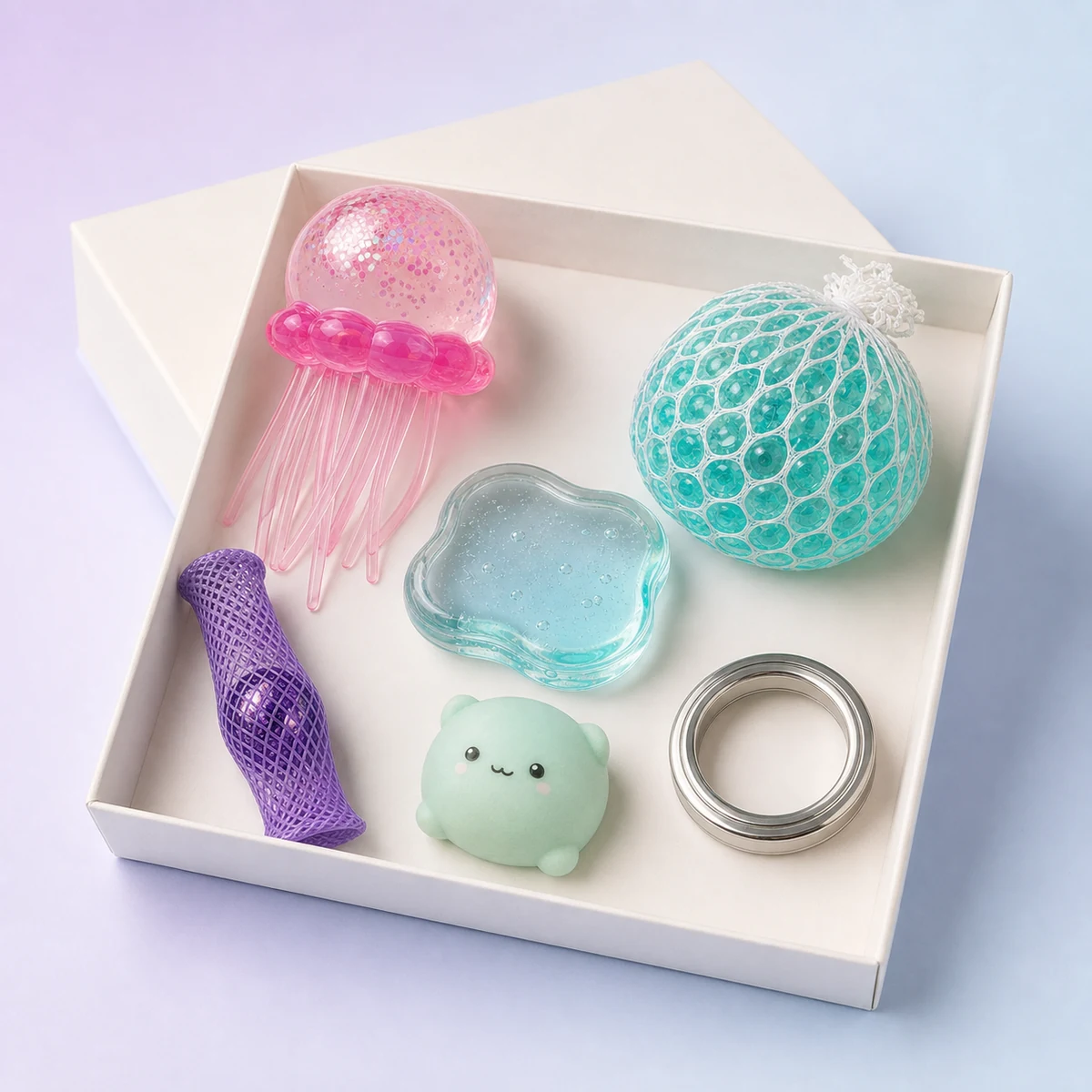
- For a gift: when you’re unsure of someone’s taste, breadth beats precision. The Calm Starter Bundle lets the person discover what they like, which is often the kindest present of all.
If you’re choosing for someone with a diagnosed condition, the same gentle rule applies to everyone: a fidget toy is a supportive tool, not a treatment plan.
What’s a quick decision quiz to find your fidget toy?
Answer these four quick questions and follow your answers to a match. It takes about a minute. There are no wrong answers, and you can absolutely land on more than one. Think of this as a friendly nudge, not a verdict.
Go through them in order.
- What’s the need right now?
- Calm down or wind down for sleep, go to question 2A.
- Focus or keep my hands busy, go to question 2B.
- Stay alert when I’m sleepy, go to question 2C.
2A. Calming. Do you like to squeeze or to watch something slowly return?
- Squeeze: Calm Orb Water-Bead Squeeze Ball or Bubble Grapes Squeeze Ball.
- Watch and press: Drift Jellyfish Glitter Squishy, Shelly Sea Turtle Slow-Rise Squishy, or Bun Buddy Panda Slow-Rise Squishy.
2B. Focusing. Does it need to be silent?
- Yes, totally silent: Roll & Squeeze Mesh Marble Fidget or Quiet Spinner Sensory Ring Set.
- Some sound is fine: Jelly Blob Transparent Gel Fidget or Lumi Jellyfish Crystal Squishy.
2C. Staying alert. Do you want more texture or more motion?
- Texture and resistance: Calm Orb Water-Bead Squeeze Ball or a firm squeeze ball.
- Repeating motion: Quiet Spinner Sensory Ring Set or Mesh Marble Fidget.
-
Not sure, or it’s a gift? Start with The Calm Starter Bundle and learn your preferences.
-
Want it chosen for you? Our fidget finder asks these same questions and points you to a match.
Still torn between two? That’s a good sign, not a problem. Many people keep a small calm one for evenings and a quiet one for work.
Do fidget toys actually help, and what can’t they do?
Fidget toys can genuinely help some people self-regulate, but they aren’t a cure or a medical treatment, and the evidence is mixed and still emerging. Occupational therapists often use sensory tools to support focus and calm, while research results vary by person and setting. Treat a fidget as one supportive tool among many.
We want to be radically honest here, because you deserve that.
What fidget toys can do: give your hands a calm, repetitive job; offer a private way to discharge restless energy; provide grounding sensory input; and create a small, soothing ritual. Many people, including a lot of neurodivergent folks, describe them as quietly steadying. Organizations like CHADD and ADDitude discuss fidgeting and movement as part of how some people with ADHD focus, and occupational therapists often note that sensory tools can support self-regulation for the right person.
What they can’t do: they don’t treat or cure anxiety, ADHD, autism, or any condition. They won’t fix a hard day or replace sleep, movement, connection, or professional care. The research on whether fidget toys improve attention or reduce anxiety is genuinely mixed, and what helps one person may do nothing for another. That’s not a flaw in you. It’s just how sensory tools work.
If you’re navigating a diagnosable condition, or anxiety that’s affecting your daily life, please talk with a doctor, therapist, or occupational therapist. A fidget toy can sit comfortably alongside that support. It just isn’t a substitute for it. Calm in the palm of your hand is real, and it’s also only ever part of the picture.
Sources & further reading
We reference trusted organizations by name. This article is informational and not a substitute for professional medical advice.
- CHADD: Discusses how movement and fidgeting can play a role in attention for some people with ADHD; referenced in general terms only.
- ADDitude: Publishes guidance on fidgeting, focus, and ADHD strategies; referenced conditionally as supportive context.
- American Occupational Therapy Association: Occupational therapists use sensory and self-regulation tools; referenced to note professional use of sensory supports.
- Child Mind Institute: Provides family-facing information on sensory needs and self-regulation; referenced as a general, reputable source.
Frequently asked questions
How do I choose a fidget toy for anxiety?
For anxiety, choose slow, soft, repetitive inputs. A squeeze ball or a slow-rise squishy gives your hands a steady, low-pressure job, which many people find grounding. Pick the motion you naturally enjoy, and make sure it's quiet enough for where you'll use it. It's a supportive tool, not a treatment for anxiety.
What's the best fidget toy to use quietly at work or in class?
The quietest options are mesh marble fidgets, sensory fidget rings, and gel blobs, because they make almost no sound and stay discreet in your hand. These let you fidget freely in meetings, classrooms, or libraries without distracting anyone nearby. Noise is the most common reason a fidget gets put away, so silent tools travel best.
How do I pick a fidget toy for a child?
For a child, prioritize size, durability, and safety first. Sturdy slow-rise squishies and squeeze balls hold up well to enthusiastic hands. Always follow the age guidance on the product, supervise use, and keep small parts away from young children who still explore with their mouths. Let the child's own preferences guide the texture and motion.
Are fidget toys good for ADHD or autism?
Many neurodivergent people find fidget toys helpful for focus and self-regulation, and occupational therapists often use sensory tools for this. That said, the research is mixed and what works varies by person. Fidget toys support, but don't treat, ADHD or autism. For a diagnosed condition, pair them with guidance from a doctor or therapist.
I don't know what I'll like. Where should I start?
Start with a small variety set so you can learn your own preferences before committing. A starter bundle lets you try squeezing, slow-rise pressing, and rolling, then notice which one you actually reach for. If you'd rather be guided, our fidget finder asks a few quick questions and suggests a match for your need and setting.