Why do quiet fidget toys matter in offices and classrooms?
Quiet fidget toys matter because they let you settle your hands and focus in a shared space without making noise that distracts the people around you. A clicking or snapping toy can pull a whole room’s attention. A silent one stays personal. It helps you, and no one else has to notice.
Shared spaces have an unspoken sound budget. In an open-plan office or a quiet classroom, a small repetitive click can travel further than you’d think, and it lands differently for everyone. Some people barely register it. Others, including many sound-sensitive and neurodivergent folks, find a repeating noise genuinely hard to tune out.
So the goal of a quiet fidget is a kind of fairness. You get the soothing, grounding movement your hands are asking for. The room stays calm for everyone else. That’s the whole idea: calm in the palm of your hand, not calm broadcast across the room.
We’ll be honest here, as we always try to be. A fidget toy isn’t going to fix a hard day, and the evidence on these tools is still mixed and emerging. But for many people, having something quiet to hold makes sitting still and staying present a little easier. That’s a real, modest thing, and worth choosing well.
What makes a fidget toy truly silent?
A fidget toy is truly silent when it has no hard parts that click, snap, rattle, or spin against each other, so squishing, rolling, stretching, and rubbing make almost no sound. Soft materials like foam, gel, and silicone tend to be quiet by nature. Hard plastic with moving joints usually is not.
The quick test is simple: imagine using the toy at full speed in a silent room. If the motion that soothes you also makes a sound, it’s not a quiet-room toy.
Here’s how common fidget styles tend to sort out:
- Genuinely quiet: slow-rising squishies, gel blobs, mesh marble fidgets, smooth sensory spinner rings, and soft squeeze balls.
- Usually noisy: click-style buttons, snap-and-pop bubble poppers, clackers, and anything with a hard spinning bearing.
- It depends: some textured or beaded toys are silent when rolled gently but rattle when shaken.
One more honest note. “Quiet” is about sound, but “discreet” is about attention, and they’re not the same. A bright, fast-moving toy can be silent yet still draw every eye in a meeting. For shared spaces, you usually want both: low sound and low visual drama.
Which Calm Toy fidgets are genuinely quiet for shared spaces?
Our genuinely quiet picks for shared spaces are the soft squishies, the mesh marble fidget, the sensory spinner rings, and the squeeze balls. None of them click, snap, or rattle in normal use. They’re designed for slow, repetitive, satisfying motion that stays between you and your hands.
A few that tend to work well at a desk or in a quiet classroom:
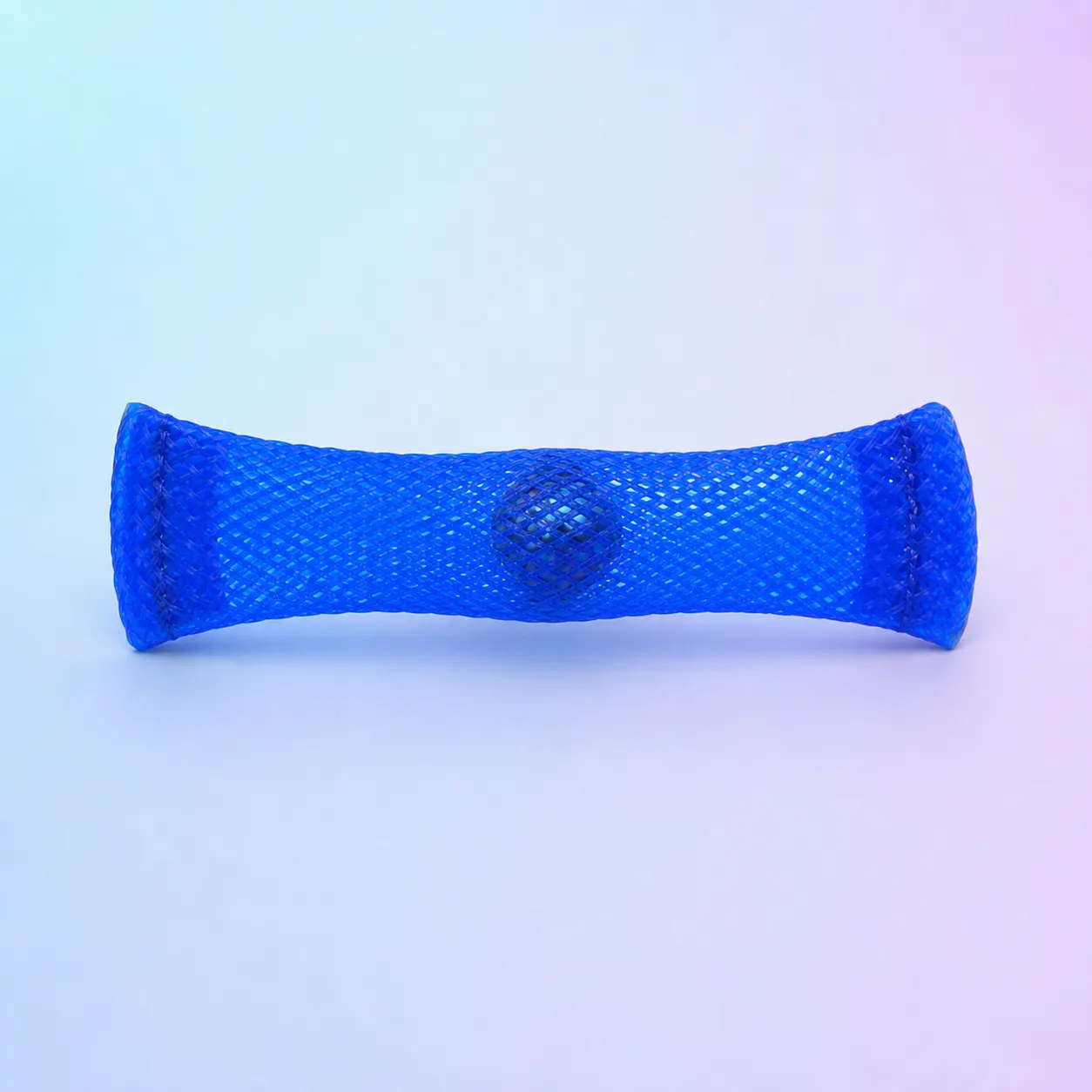
- The Roll & Squeeze Mesh Marble Fidget is a strong meeting companion. You roll the marble back and forth inside the mesh, silently, often without looking down.
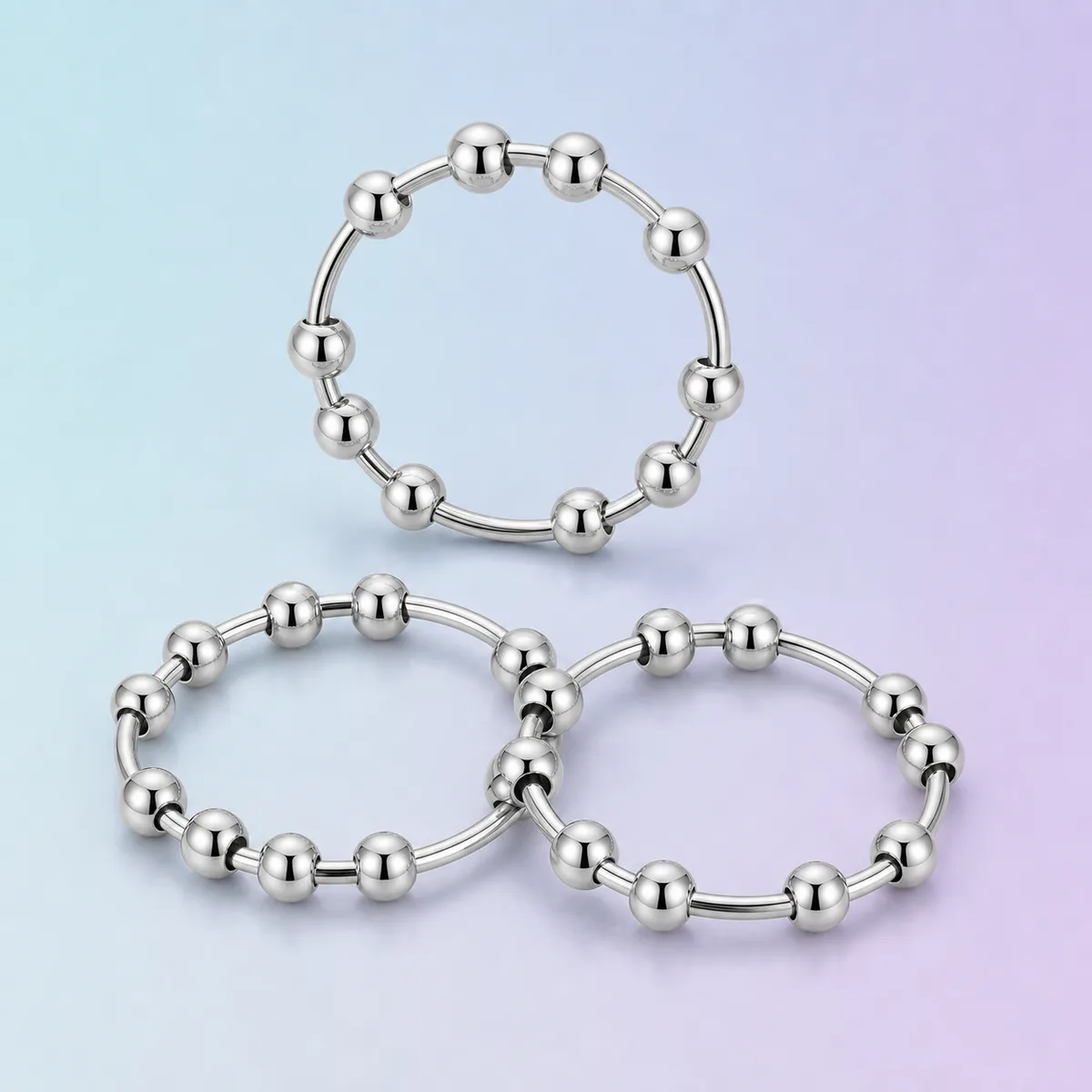
- The Quiet Spinner Sensory Ring Set (3-Pack) is built to be discreet. You spin the inner band on your finger under the table; it’s quiet and easy to hide.
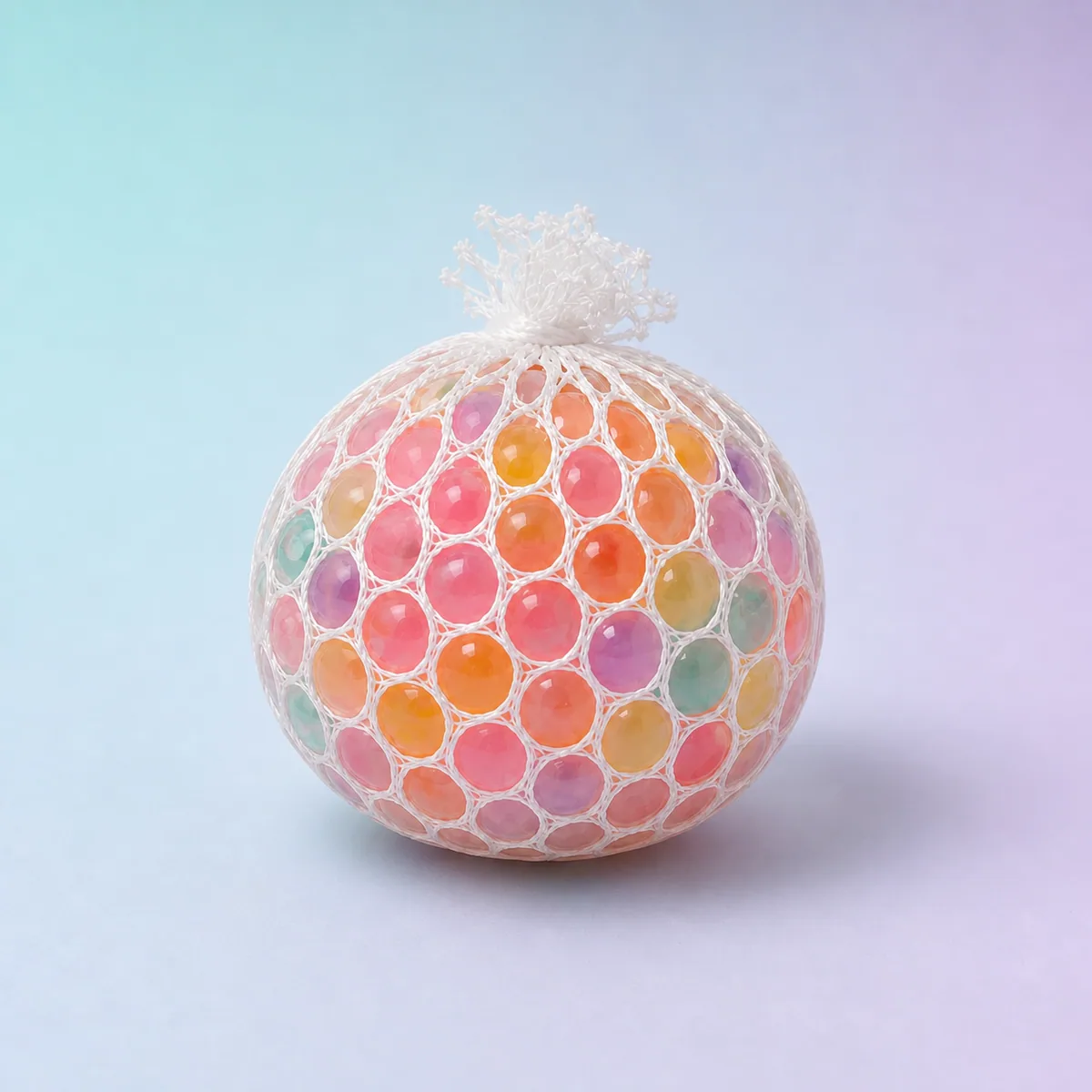
- The Calm Orb Water-Bead Squeeze Ball and Bubble Grapes Squeeze Ball give a slow, grounding squeeze, useful if you tend to bite your nails or jiggle a pen.
- Slow-rising squishies like the Mochi Octopus Slow-Rise Squishy, Shelly Sea Turtle Slow-Rise Squishy, and Drift Jellyfish Glitter Squishy reward unhurried pressing and watching, which suits quiet wind-down moments.
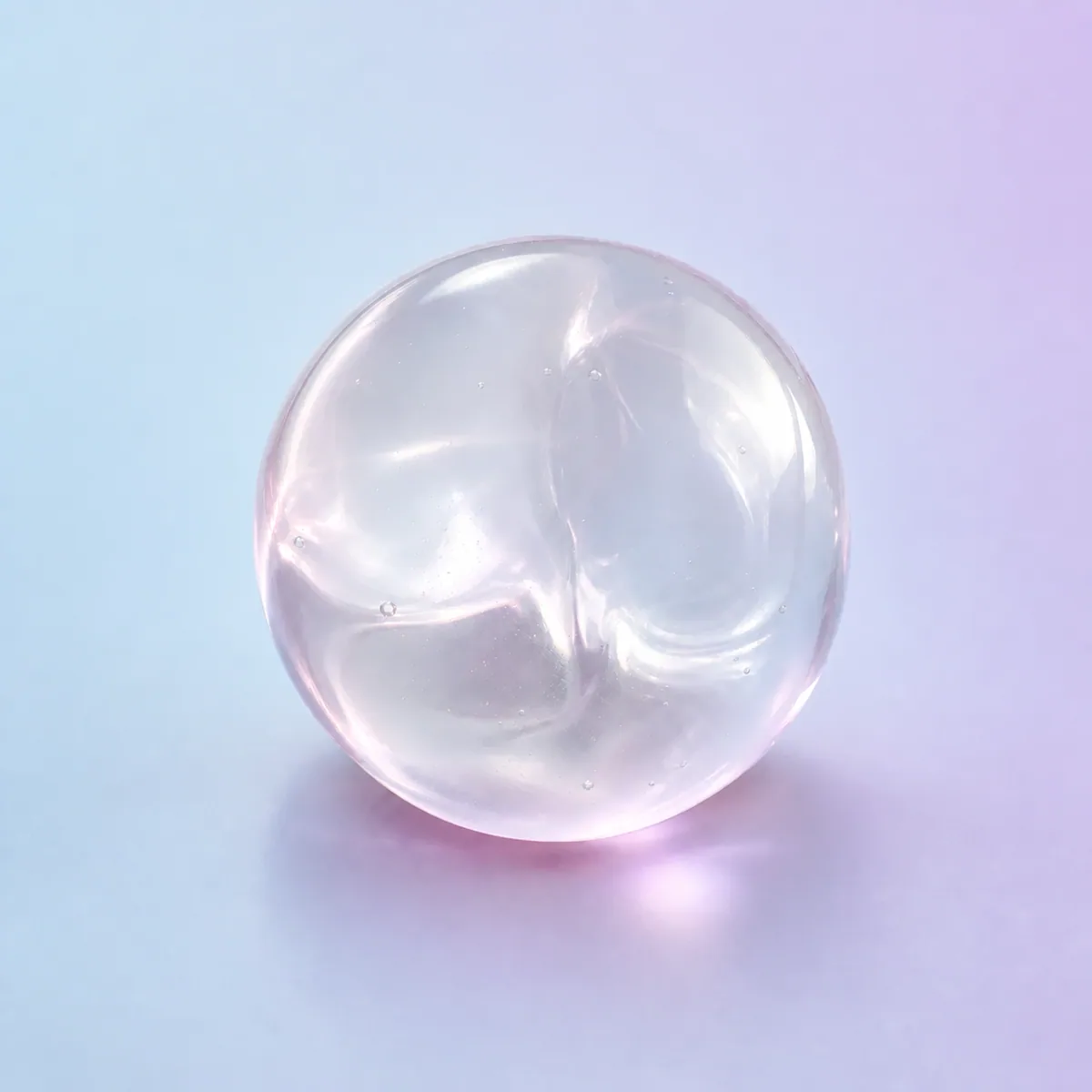
- The Jelly Blob Transparent Gel Fidget leans into visual, grounding sensory input, quiet to handle, calming to watch.
If you’d rather sample a few and learn what your hands prefer, the Calm Starter Bundle (6-Piece Sensory Kit) gathers a quiet-friendly mix in one place.
Which quiet fidget toy is best for my situation?
The best quiet fidget for you depends on where you’ll use it and what your hands want: discreet spinning for meetings, gentle squeezing for restless focus, or slow squishing for winding down. Use the table below as a starting point, then trust your own hands over any chart.
| Situation | Quiet pick | Why it fits |
|---|---|---|
| Long video meetings | Quiet Spinner Sensory Ring Set | Discreet, spins under the table, easy to hide |
| Focused desk work | Roll & Squeeze Mesh Marble Fidget | Silent rolling motion, no need to look down |
| Restless hands / nail-biting | Calm Orb Water-Bead Squeeze Ball | Slow grounding squeeze keeps hands busy |
| Visual grounding at a desk | Jelly Blob Transparent Gel Fidget | Calming to watch, quiet to handle |
| Evening wind-down | Shelly Sea Turtle Slow-Rise Squishy | Slow rise rewards unhurried, gentle pressing |
| Classroom calm corner | Mini Mochi Animals Squishy Set (12-Pack) | Multiple small, soft, easy-to-clean toys |
| Not sure where to start | Calm Starter Bundle (6-Piece Sensory Kit) | A quiet-friendly sampler to learn your preference |
There’s no single right answer here. Some people focus better with a firm squeeze; others settle with a slow, soft squish. Trying a couple and noticing what actually helps is part of the point.
What are the etiquette rules for fidgeting at work?
The etiquette of fidgeting at work comes down to three quiet rules: keep it silent, keep it in your own space, and keep it from distracting you or anyone else. A fidget toy is there to help you stay present. The moment it pulls focus, from you or a colleague, it’s working against you.
A short, friendly checklist:
- Choose silent toys for any shared room. Save clicky or poppy ones for solo time.
- Keep it small and low-key. Under-the-desk or in-hand beats waving something colorful across the table.
- Mind your neighbor’s space. Fidget within your own area, not on the shared desk or someone’s eyeline.
- Use it to listen better, not to check out. If you’ve stopped following the conversation, set it down.
- You don’t owe anyone a long explanation. “It helps me focus” is plenty. Many workplaces are genuinely fine with it.
It’s worth saying plainly: needing to move your hands to think is common and valid. Fidgeting is a normal self-regulation strategy, not a sign you’re not paying attention. Quiet, considerate fidgeting lets you take care of yourself and respect the room at the same time.
How do I set up a calm corner with quiet fidget toys in a classroom?
Set up a classroom calm corner as a small, low-stimulation space with a few quiet fidget toys, simple rules, and soft, predictable boundaries. Keep the toy set small and rotate it, choose silent and easy-to-clean options, and frame the corner as a reset spot, not a time-out or punishment.
A practical starting setup:
- A defined, cozy spot. A rug, a cushion, or a corner away from the busiest traffic.
- A small rotating basket of quiet toys. The Mini Mochi Animals Squishy Set (12-Pack) gives several soft, silent options to swap in and out, and the Panda Bun Slow-Rise Squishy or Sea Turtle squishy suit calmer moments.
- Clear, kind rules. Posted simply: one person, quiet voices, gentle hands, toys stay in the corner.
- A time cue. A small visual timer helps a child know when to return, without anyone hovering.
- Easy cleaning. Choose toys you can wipe down, and clean on a regular schedule.
Frame it warmly. Occupational therapists often describe sensory tools as supports for self-regulation, and organizations like the Child Mind Institute and CHADD discuss calming strategies for kids who need movement to focus. The calm corner works best when it feels like a welcome option, not a consequence. For a child with a diagnosed condition, loop in their teacher, counselor, or occupational therapist so the corner fits their actual plan.
Do quiet fidget toys actually help with focus and anxiety?
Quiet fidget toys may help some people focus and feel calmer by giving restless hands a small, repetitive outlet. But the evidence is mixed and emerging, and they aren’t a treatment for anxiety, ADHD, or sensory differences. They’re supportive tools that work well for some and less for others.
Here’s the honest picture. Many people report that having something quiet to hold makes it easier to sit through a meeting, listen in class, or ride out a wave of restlessness. Occupational therapists often use sensory and fidget tools as part of broader self-regulation strategies, and groups like the American Occupational Therapy Association, CHADD, ADDitude, and the Child Mind Institute discuss them in that supportive context. Research on fidgeting and sensory regulation suggests there may be real benefit for some individuals, while also noting the findings are far from settled.
What a quiet fidget toy can do: give your hands a calm focus, offer a grounding sensory moment, and make stillness a little more bearable.
What it can’t do: diagnose or treat a condition, or replace real support. If anxiety, attention, or sensory challenges are affecting daily life, please talk with a doctor, therapist, or occupational therapist. A toy can sit alongside that care, gently. It just isn’t a substitute for it.
Sources & further reading
We reference trusted organizations by name. This article is informational and not a substitute for professional medical advice.
- American Occupational Therapy Association: Discusses sensory and self-regulation strategies that occupational therapists use to support focus and calming; referenced in general terms only.
- CHADD: Describes supportive strategies for attention and self-regulation, including movement and fidget tools, in a general educational context.
- ADDitude: Covers fidgeting and sensory tools as part of broader focus and attention strategies; cited conditionally, not as a specific claim.
- Child Mind Institute: Discusses calming strategies and sensory supports for children, including the idea of calm-down spaces; referenced generally.
Frequently asked questions
Are squishy toys quiet enough for a silent office?
Yes. Slow-rising squishies make essentially no sound when you press and watch them rise, which makes them well suited to silent offices. The main thing to watch is attention, not noise. A bright squishy can still draw eyes in a meeting, so keep it low-key and within your own space.
What is the quietest fidget toy for meetings?
A mesh marble fidget or a smooth sensory spinner ring tends to be the quietest choice for meetings, because you can roll or spin them silently, often under the table and without looking down. Our Roll & Squeeze Mesh Marble Fidget and Quiet Spinner Sensory Ring Set are both designed for exactly this kind of discreet, silent use.
Are fidget toys allowed in classrooms?
It depends on the school and teacher, so it's always worth asking first. Many classrooms welcome quiet, non-distracting fidgets, especially as part of a calm corner or an agreed plan for a student who needs movement to focus. Choosing silent, low-key toys and following the teacher's rules makes a yes far more likely.
Can quiet fidget toys help with anxiety?
They may help some people feel a little calmer by giving the hands a quiet, repetitive focus, but they are supportive tools rather than treatment, and the evidence is still emerging. They work better for some people than others. If anxiety is affecting daily life, please speak with a doctor or therapist. A fidget toy can sit alongside real support, not replace it.
How do I clean fidget toys used in a shared classroom?
Wipe non-porous toys like gel blobs, squeeze balls, and silicone rings with a gentle soap-and-water cloth or a child-safe wipe, then let them air dry fully. Choose easy-to-clean toys for shared use, clean on a regular schedule, and follow the care notes on the product. Avoid soaking porous foam squishies, which can hold water.