Can a fidget toy actually help with nail-biting?
Yes, a fidget toy can help with nail-biting by giving your hands something else to do in the moment the urge shows up. It works as a competing motion, not a cure. By keeping your fingers busy with squeezing or rolling, you make it a little harder for the automatic hand-to-mouth habit to run on autopilot.
Here’s the honest version. The evidence on fidget toys is still mixed and emerging, and no toy will erase a deeply rooted habit on its own. What a fidget can do is offer your hands a different, satisfying place to go. Nail-biting, skin-picking, and hair-pulling often happen without much conscious thought. Your hands just drift toward the habit while your mind is somewhere else. A toy you can reach for interrupts that drift, gently, before it becomes a full nail-biting session.
Think of it less like a switch you flip and more like a path you wear in over time. The toy gives you a small choice in a moment that used to feel automatic. Some people find that choice alone makes a real difference. Others use it alongside other strategies. Both are completely valid.
What are body-focused repetitive behaviors (BFRBs)?
Body-focused repetitive behaviors, or BFRBs, are a group of habits where a person repeatedly touches their body in a way that can cause damage: most commonly nail-biting, skin-picking (excoriation), and hair-pulling (trichotillomania). They’re very common, often soothing in the moment, and not a character flaw or a failure of willpower.
Mental health organizations like the Child Mind Institute and the TLC Foundation for BFRBs describe these behaviors as far more widespread than most people realize. Many of us have a version of one. They tend to show up during boredom, stress, concentration, or that fuzzy in-between state when your hands are idle and your mind is busy.
A few things worth knowing, gently:
- BFRBs are not the same as ordinary fidgeting, though they can overlap. Fidgeting tends to be neutral or soothing. A BFRB usually causes some damage or distress over time.
- They’re often automatic. Many people don’t notice they’ve started until they’re already mid-habit.
- They are not a sign of weakness. Researchers generally treat BFRBs as nervous-system and habit-loop patterns, not moral shortcomings.
- They’re treatable and manageable. Plenty of people reduce or change these habits with the right support and tools.
If you recognize yourself here, take a breath. You’re in very ordinary, very human company.
How does a competing hand motion break a habit loop?
A competing hand motion breaks a habit loop by replacing the habit action with a different one that uses the same hands at the same trigger moment. Instead of trying to simply not do the habit (which is hard), you give your hands an alternative motion to do instead. This idea sits at the heart of an approach called habit-reversal training.
Most habits follow a loop: a cue (stress, boredom, an idle moment), the behavior (biting, picking, pulling), and a small payoff (relief, stimulation, focus). Willpower mostly targets the middle step, which is the hardest place to intervene. A competing response works differently. It accepts the cue and the need for a payoff, and simply swaps in a new behavior that gives a similar feeling without the harm.
That’s exactly where a squeeze or roll fidget fits. When you feel the familiar pull toward your nails, you reach for the toy instead and squeeze. Your hands still get movement. You still get that small hit of sensory relief. But the loop now ends somewhere kinder.
Clinicians who teach habit-reversal often suggest the competing response should be something you can do almost anywhere, that occupies your hands, and that feels at least a little satisfying. A small, quiet fidget checks all three boxes.
What kind of fidget toy is best for nail-biting and picking?
For nail-biting and picking, the best fidget toys are ones you squeeze or roll. They keep your fingers occupied and your hands close to your body, which is exactly where these habits live. Squeeze balls, slow-rise squishies, textured rings, and rolling fidgets all give your hands a clear, repeatable motion to do instead.
The goal is to match the toy to the motion you’re trying to replace. Nail-biting and skin-picking are finger-and-fingertip behaviors, so toys that engage the fingers tend to fit best. Here’s a simple way to think about it:
| If your habit looks like… | Look for a fidget that… | A good fit from our shop |
|---|---|---|
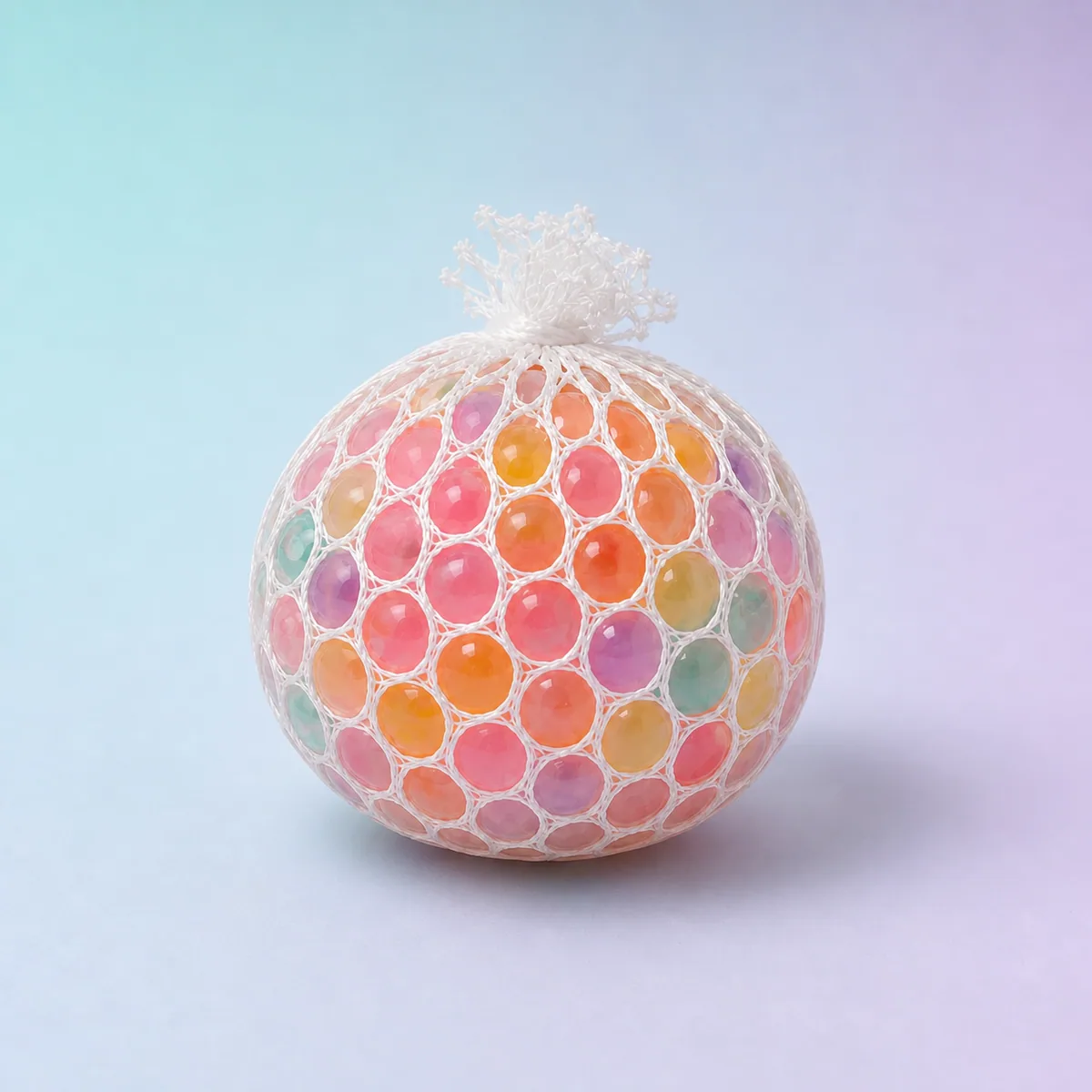
| Biting or picking at nails and fingertips | Engages the fingertips with resistance | Calm Orb Water-Bead Squeeze Ball |
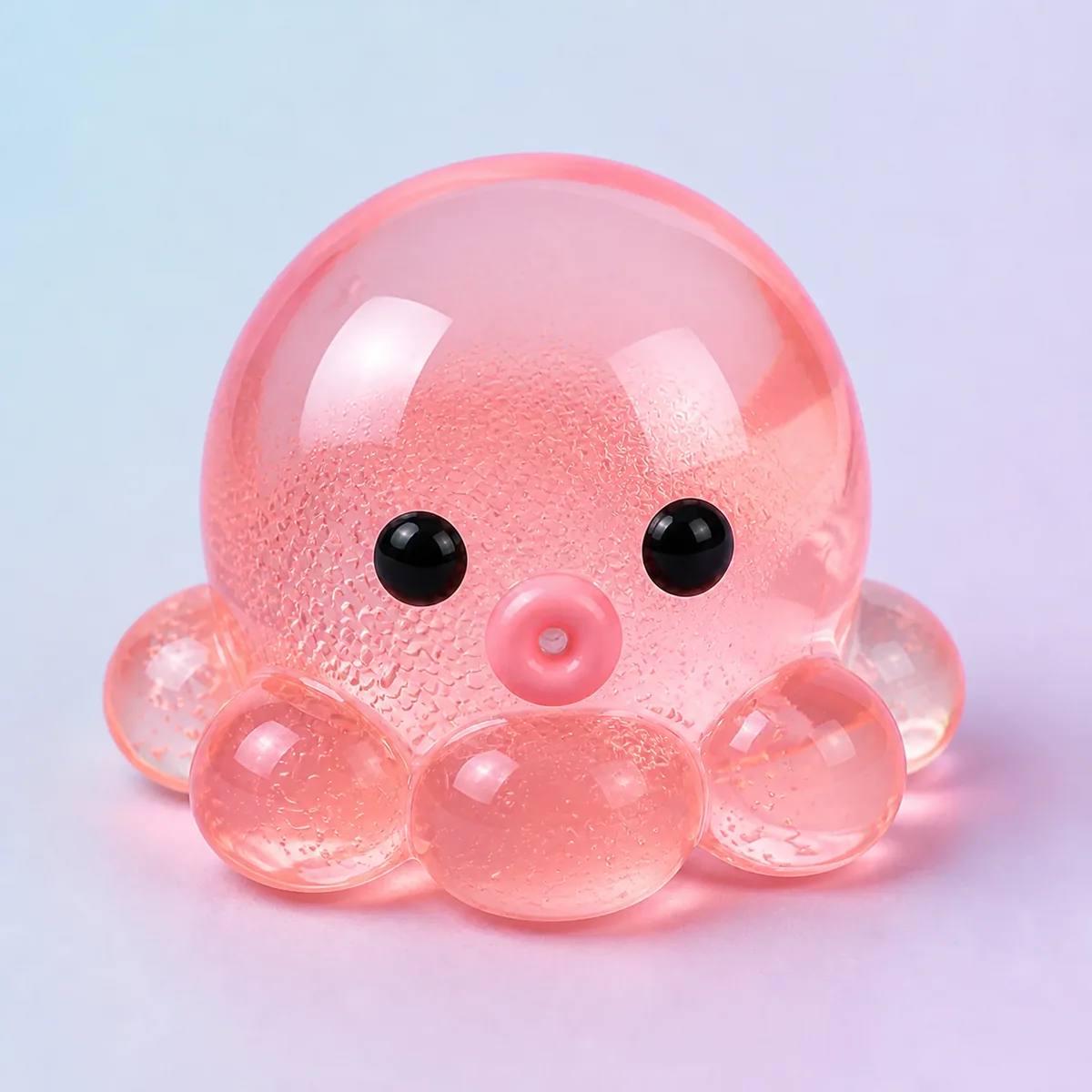
| Restless squeezing or clenching | Offers slow, satisfying give and rebound | Mochi Octopus Slow-Rise Squishy |
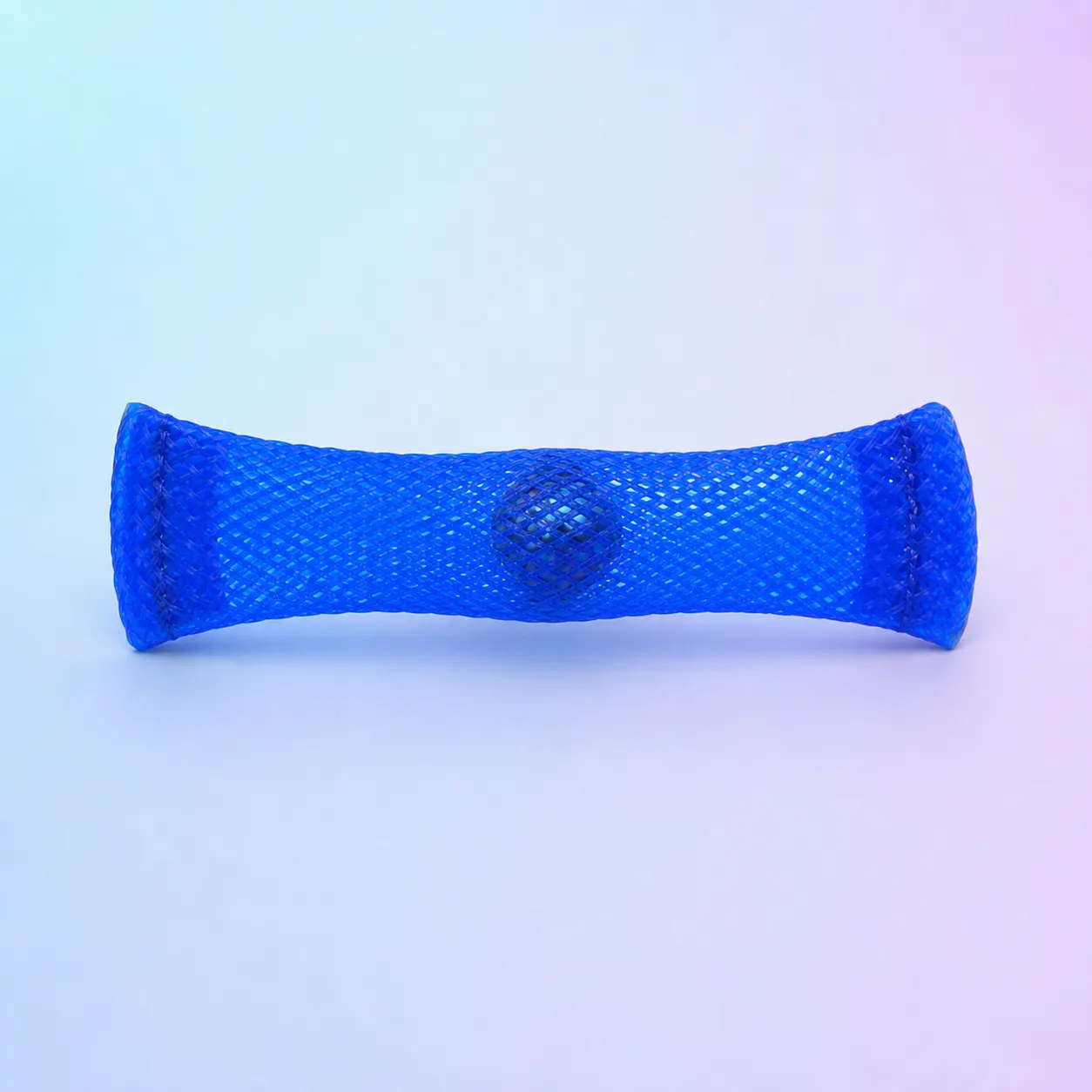
| Picking that flares at a desk or in meetings | Stays silent and discreet in one hand | Roll & Squeeze Mesh Marble Fidget |
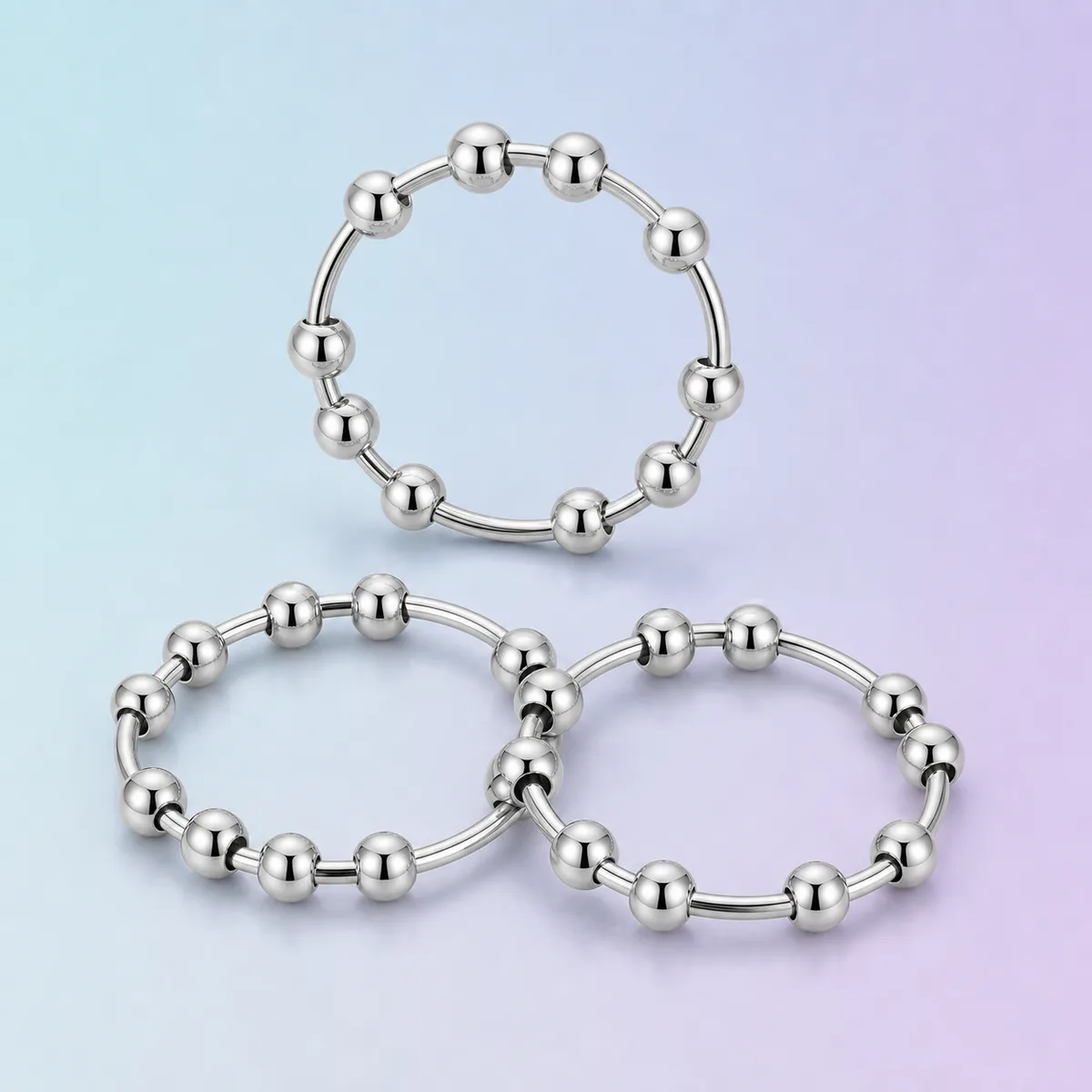
| Hands wandering to your face when idle | Lives on a finger so it’s always there | Quiet Spinner Sensory Ring Set |
| Needing a few options to find your motion | Lets you sample textures and shapes | The Calm Starter Bundle |
The Calm Orb Water-Bead Squeeze Ball is a natural starting point for nail-biting specifically. It asks your fingertips to do the squeezing, which is the same region the habit targets. If you’d rather not commit to one motion yet, the Calm Starter Bundle lets you try several and notice which one your hands actually reach for.
How do I use a fidget toy to replace nail-biting in daily life?
To use a fidget toy to replace nail-biting, keep it within arm’s reach of wherever the habit usually happens, and reach for it the moment you notice the urge, or even just notice your hand drifting. The trick is availability and repetition. A toy in a drawer can’t help; a toy by your keyboard can.
Here’s a gentle, practical way to start:
- Notice your triggers. For a few days, just observe when the habit shows up. Scrolling? On calls? Reading? Winding down at night? No judgment, only curiosity.
- Place toys where those moments happen. Your desk, your nightstand, your bag, the couch. Think of it as stationing a friend at each trigger.
- Reach first, decide later. When the urge comes, pick up the toy before anything else. Squeeze, roll, repeat. Let your hands have their moment.
- Pair it with a pause. A slow breath while you squeeze can deepen the relief and buy your mind a second to catch up.
- Expect an uneven path. Some days the toy works beautifully. Some days you’ll bite anyway. That’s not failure. That’s how habit change actually goes.
A slow-rise squishy like the Shelly Sea Turtle works well for the nighttime wind-down, when many people pick or bite without realizing. A discreet option like the Quiet Spinner Sensory Ring Set is easier to use during meetings or in public, where reaching for a squishy might feel awkward. Keep it low-pressure. You’re building a new path, not passing a test.
Are fidget toys good for sensory and neurodivergent needs too?
Yes, fidget toys are genuinely useful for sensory and neurodivergent needs, not just as a habit tool. For many autistic and ADHD people, fidgeting and self-stimulating motions are a healthy way to regulate, focus, and feel grounded. A toy can offer that same sensory input in a form that’s comfortable and sustainable.
We want to be clear about something: neurodivergent and sensory-seeking folks are a first-class audience here, not an afterthought. Occupational therapists often note that purposeful movement and tactile input can support attention and emotional regulation. Organizations focused on ADHD, like CHADD and ADDitude, frequently describe fidgeting as something that can help certain people concentrate rather than distract them.
There’s a meaningful overlap with BFRBs, too. Sometimes nail-biting or skin-picking is partly a search for sensory input that isn’t being met elsewhere. In that case, a satisfying fidget isn’t just blocking a habit. It’s offering the stimulation your nervous system was looking for in the first place.
A few toys lean especially sensory:
- The Jelly Blob Transparent Gel Fidget gives strong visual and tactile feedback for grounding.
- The Mini Mochi Animals Squishy Set offers variety, which helps if your sensory preferences shift day to day.
- The Mochi Octopus Slow-Rise Squishy pairs a soft squeeze with a slow, calming rebound.
There’s no wrong way to use these. If a toy helps you feel steadier, it’s doing its job.
When should I see a professional about nail-biting or picking?
Consider seeing a professional when nail-biting, skin-picking, or hair-pulling causes you real distress, leads to bleeding, infection, scarring, or hair loss, takes up significant time, or feels genuinely out of your control. A fidget toy is a supportive tool. It is not medical treatment, and some BFRBs deserve proper care.
This is the radically honest part, and it matters. For milder, on-autopilot nail-biting, a competing-motion fidget and a bit of self-awareness may be plenty. But BFRBs exist on a spectrum, and some sit firmly in territory where professional support helps most.
Reach out to a doctor, therapist, or other qualified professional if:
- The behavior causes physical damage: broken skin, infections, noticeable hair loss.
- It’s tied to anxiety, depression, or distress that’s hard to manage on your own.
- You’ve tried to stop and consistently can’t, and that loss of control weighs on you.
- It’s interfering with work, relationships, sleep, or how you feel about yourself.
Evidence-based approaches like habit-reversal training and cognitive behavioral therapy have helped many people with BFRBs. Resources from organizations such as the TLC Foundation for BFRBs and the Child Mind Institute can be a good starting point for finding informed support. Asking for help isn’t a step backward. It’s one of the most effective things you can do. A fidget toy can sit comfortably alongside that care, never in place of it.
Sources & further reading
We reference trusted organizations by name. This article is informational and not a substitute for professional medical advice.
- TLC Foundation for BFRBs: A nonprofit focused on body-focused repetitive behaviors such as hair-pulling and skin-picking; a starting point for education and finding informed support.
- Child Mind Institute: Describes body-focused repetitive behaviors and evidence-based approaches like habit-reversal training in accessible, family-friendly terms.
- CHADD: A leading ADHD organization that discusses how purposeful movement and fidgeting can support attention and self-regulation for some people.
- ADDitude: A widely read ADHD resource that often covers fidgeting and sensory tools as part of focus and regulation strategies.
- American Occupational Therapy Association: Occupational therapists often note that tactile input and purposeful movement can support attention and emotional regulation.
Frequently asked questions
Will a fidget toy stop my nail-biting completely?
Not on its own, and we'd rather be honest about that. A fidget toy gives your hands a competing motion that can make nail-biting easier to interrupt and notice, but it isn't a cure. Many people use it as one helpful tool among several. For stubborn or distressing habits, pairing a toy with professional support tends to work best.
Why do squeeze and roll toys work better than other fidgets for these habits?
Squeeze and roll toys keep your fingers busy and your hands close to your body, which is exactly where nail-biting, picking, and pulling happen. They offer a clear, repeatable motion that satisfies the same urge for sensory input. Spinning or throwing toys send your hands away from the trigger zone, so they're a less natural swap.
Is nail-biting a sign of a mental health problem?
Not necessarily. Occasional nail-biting is extremely common and usually nothing to worry about. It becomes worth attention when it causes damage, distress, or feels out of your control, at which point it may be a body-focused repetitive behavior worth discussing with a professional. A habit existing doesn't mean something is wrong with you.
Can fidget toys help neurodivergent people, not just with habits?
Absolutely. For many autistic and ADHD people, fidgeting is a healthy way to regulate, focus, and feel grounded, and a good toy provides that sensory input in a comfortable form. Occupational therapists and groups like CHADD often note that purposeful movement can support attention rather than distract from it.
Where should I keep my fidget toy so it actually helps?
Keep it within arm's reach of wherever the habit usually shows up: your desk, nightstand, bag, or couch. A toy in a drawer can't compete with an automatic habit. Many people keep a few around their most common trigger spots so reaching for the toy becomes the easy, default move.
What if the toy works some days and not others?
That's completely normal and not a sign of failure. Habit change is rarely a straight line. Some days the toy will redirect you beautifully; other days the old habit wins. Both are part of the process. Be kind to yourself, keep the toy handy, and treat each reach for it as a small win regardless of the day's outcome.