What’s the difference between a squishy, a stress ball, and a gel fidget?
A squishy is a soft, slow-rising foam toy that compresses and gently re-inflates; a stress ball is a denser, springy ball that squeezes and bounces back fast; a gel fidget is a soft, often see-through blob that squishes, stretches, and grounds you visually. Each calms in a slightly different way.
Think of it as three flavors of the same idea: giving your hands something kind to do.
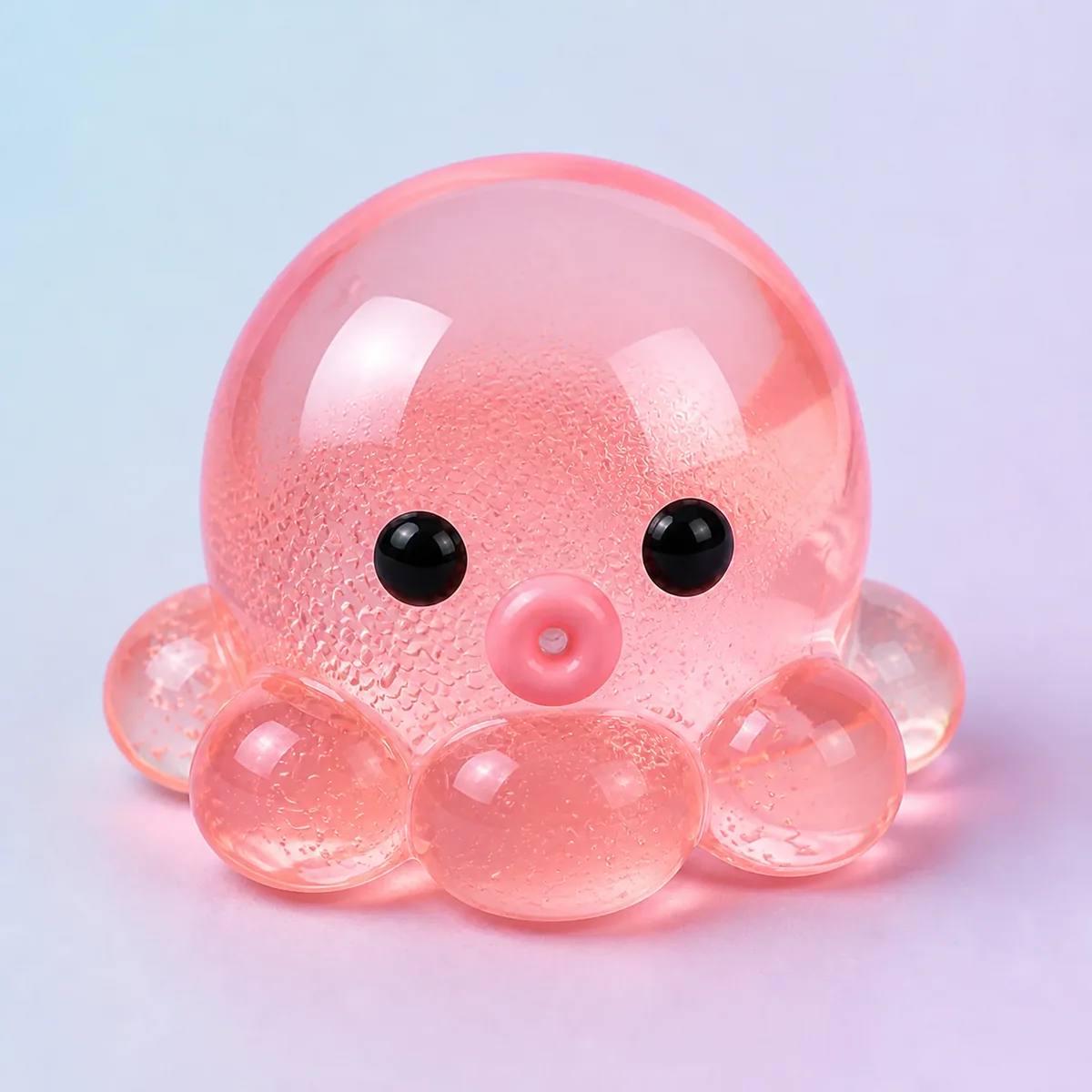
A slow-rising squishy (like our Mochi Octopus Slow-Rise Squishy or Shelly Sea Turtle) is all about the pause. You press it flat, and then you wait. It rises back up slowly, almost like it’s breathing with you. That unhurried recovery is the whole point. It invites you to slow down too.
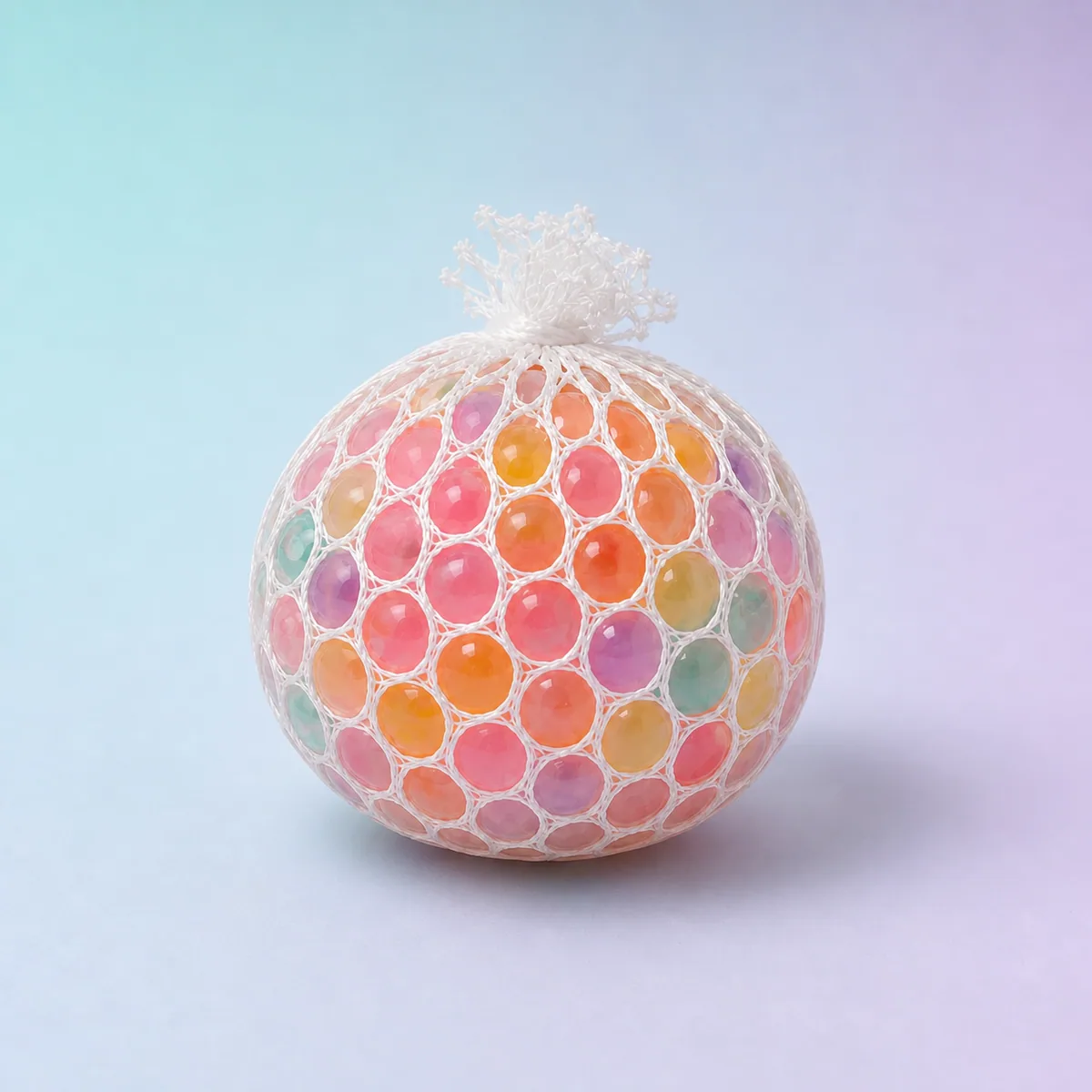
A stress ball (like the Calm Orb Water-Bead Squeeze Ball or Bubble Grapes Squeeze Ball) is about feedback. Squeeze hard, feel resistance, let go, feel the rebound. It’s a quick, satisfying loop that’s wonderful when you’re holding tension and need somewhere to put it.
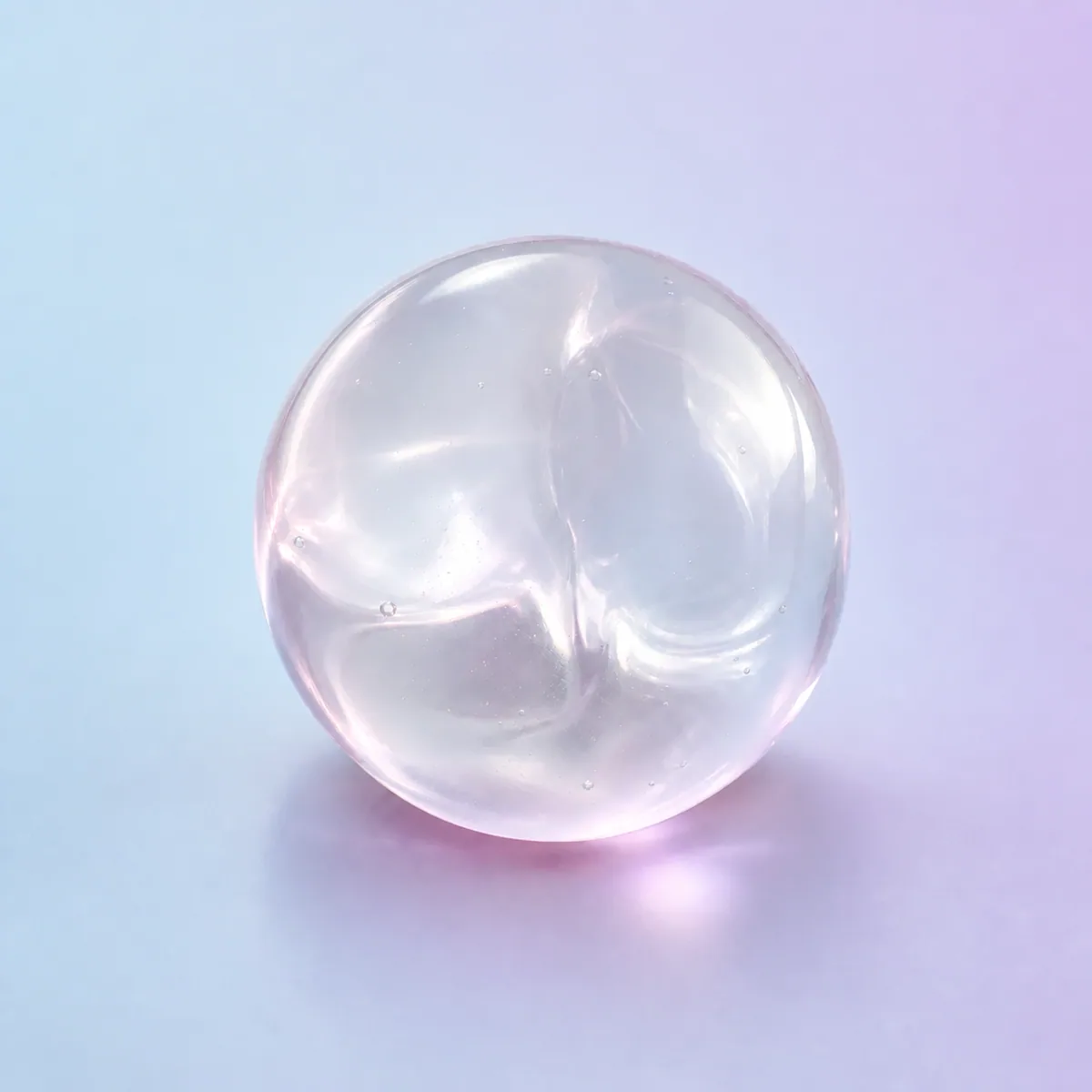
A gel fidget (like the Jelly Blob Transparent Gel Fidget) sits in between, with a soft, yielding, slightly cool feel. Many are transparent, so there’s a visual, almost mesmerizing quality: light moving through it, shapes shifting under your fingers.
None of these are better than the others. They’re just suited to different moments and different sensory wiring.
Which calming toy is best for me, a quick comparison table?
The best calming toy for you depends on five things: the texture you enjoy, how much rebound you want, how quiet it needs to be, how mess-tolerant you are, and how rugged it has to be. The table below lays all three types side by side so you can scan and self-select in under a minute.
Read across the row that matters most to you. If you work in a quiet office, start with the Noise column; if you’re shopping for a child, look at Mess and Durability first.
| Feature | Slow-Rising Squishy | Stress Ball | Gel Fidget |
|---|---|---|---|
| Texture | Soft, plush, marshmallow-like | Firm, springy, varied (beaded or smooth) | Soft, yielding, often cool and see-through |
| Rebound | Slow and gradual (3–8 seconds) | Fast and bouncy | Medium, soft return |
| Noise | Silent | Mostly quiet (water-bead types can whisper) | Silent |
| Best for | Wind-down, sleep, sensory comfort, gifting | Tension release, restless hands, hand strength | Quiet focus, visual grounding, desk and office |
| Mess | Low (keep away from grime; surface can mark) | Low–medium (only if the skin tears) | Low (keep off fabric and pet hair) |
| Durability | Moderate (gentle squeezing extends life) | High with quality skins; varies by fill | Moderate (avoid sharp nails and pulling) |
A quick honesty note: durability depends a lot on how a toy is used. A squishy squeezed gently for years can outlast a stress ball that gets dug into with fingernails. Treat the table as a starting map, not a guarantee.
Is a squishy good for anxiety and winding down before sleep?
Yes, slow-rising squishies are especially well suited to anxiety and bedtime wind-down because their gradual recovery encourages a slower pace. Pressing and watching the foam rise can become a small, repeatable ritual that signals to your body that it’s okay to ease off. Many people find that quiet repetition genuinely soothing.
The magic of a squishy is the waiting. You compress it, and instead of snapping back, it takes its time. That slowness is hard to rush, which is exactly why it pairs well with the moments when your mind is racing and you want to step down a gear.
For sleep specifically, a squishy is silent and soft enough to keep on a nightstand. Our Drift Jellyfish Glitter Squishy and Bun Buddy Panda Slow-Rise Squishy were chosen for those quiet, dimly lit minutes before sleep, something gentle to hold while your thoughts settle.
A few squishies that lean into calm and sensory comfort:
- Mochi Octopus Slow-Rise Squishy: pocket-sized, endlessly squeezable, great for anxious hands.
- Shelly Sea Turtle Slow-Rise Squishy: soft and grounding, a kind companion for sensory days.
- Drift Jellyfish Glitter Squishy: the glitter adds a quiet visual element for wind-down.
Honest caveat: a squishy can help you feel a little calmer in the moment, but it isn’t a treatment for an anxiety disorder. If anxiety is frequently getting in the way of your life, a squishy can sit comfortably alongside support from a doctor or therapist, not replace it. Organizations like the Child Mind Institute and CHADD describe fidget and sensory tools as one small part of a larger toolkit, and that framing feels right.
When is a stress ball the better choice?
A stress ball is the better choice when you want strong, immediate feedback (that satisfying squeeze-resist-release loop) or when your hands feel restless and need something firmer to grip. It’s also a friendly way to build a little hand strength and to redirect habits like nail-biting toward something more comfortable.
Squishies ask you to slow down. Stress balls let you discharge. If you’ve ever clenched your jaw or balled up your fists in a tense moment, you already understand the appeal. A stress ball gives that impulse a safe, repeatable home.
The texture variety matters here. A smooth stress ball feels different from a water-bead one, where dozens of little beads shift under the skin as you squeeze. That moving, gravelly texture adds a second layer of sensory input that many people find extra grounding.
Good fits depending on what you’re after:
- Calm Orb Water-Bead Squeeze Ball: beaded texture plus a firmer squeeze; popular for anxious hands, hand strength, and gently redirecting nail-biting.
- Bubble Grapes Squeeze Ball: clustered bubbles to press one by one, satisfying and a touch playful on a desk.
A realistic note on durability: a stress ball is only as tough as its skin. Sharp fingernails and over-stretching are the usual culprits behind a torn ball, and a torn one can leak its fill, so squeeze with the pads of your fingers, not your nails, and keep it away from very young children who might bite it.
What makes a gel fidget different, and who is it for?
A gel fidget is different because it adds a visual, almost hypnotic dimension to the squeeze. Many are transparent, so you watch light and shapes move through the gel as your fingers work. It’s for people who are drawn to see-through textures, who want something silent for the office, or who use visual focus to feel grounded.
Where a squishy soothes through slowness and a stress ball through feedback, a gel fidget often soothes through looking. There’s something steadying about a clear blob that shifts and stretches and slowly settles. For visually-oriented sensory seekers, that’s a feature, not a gimmick.
It’s also one of the quietest options, which makes it a strong desk companion. Our Jelly Blob Transparent Gel Fidget was picked exactly for that lane: visual sensory input, focus, and grounding, without a sound.
Gel fidgets tend to suit:
- People who find clear, jelly-like textures genuinely satisfying.
- Anyone needing a silent fidget for shared workspaces or study sessions.
- Sensory seekers who regulate through watching as much as touching.
Care-wise, gel attracts lint, pet hair, and dust more than a foam squishy, so it’s happiest on a clean desk rather than rolling around a bag. Keep nails gentle and avoid hard pulling, and a good gel fidget will stay smooth and clear for a long time.
Which calming toy is quietest and most discreet for work or school?
For genuinely silent, discreet fidgeting, gel fidgets, slow-rising squishies, mesh-marble toys, and sensory rings are your best bets. They make essentially no noise and can be used under a desk or in a pocket without drawing attention, which matters in meetings, classrooms, and open offices where clicking or popping would stand out.
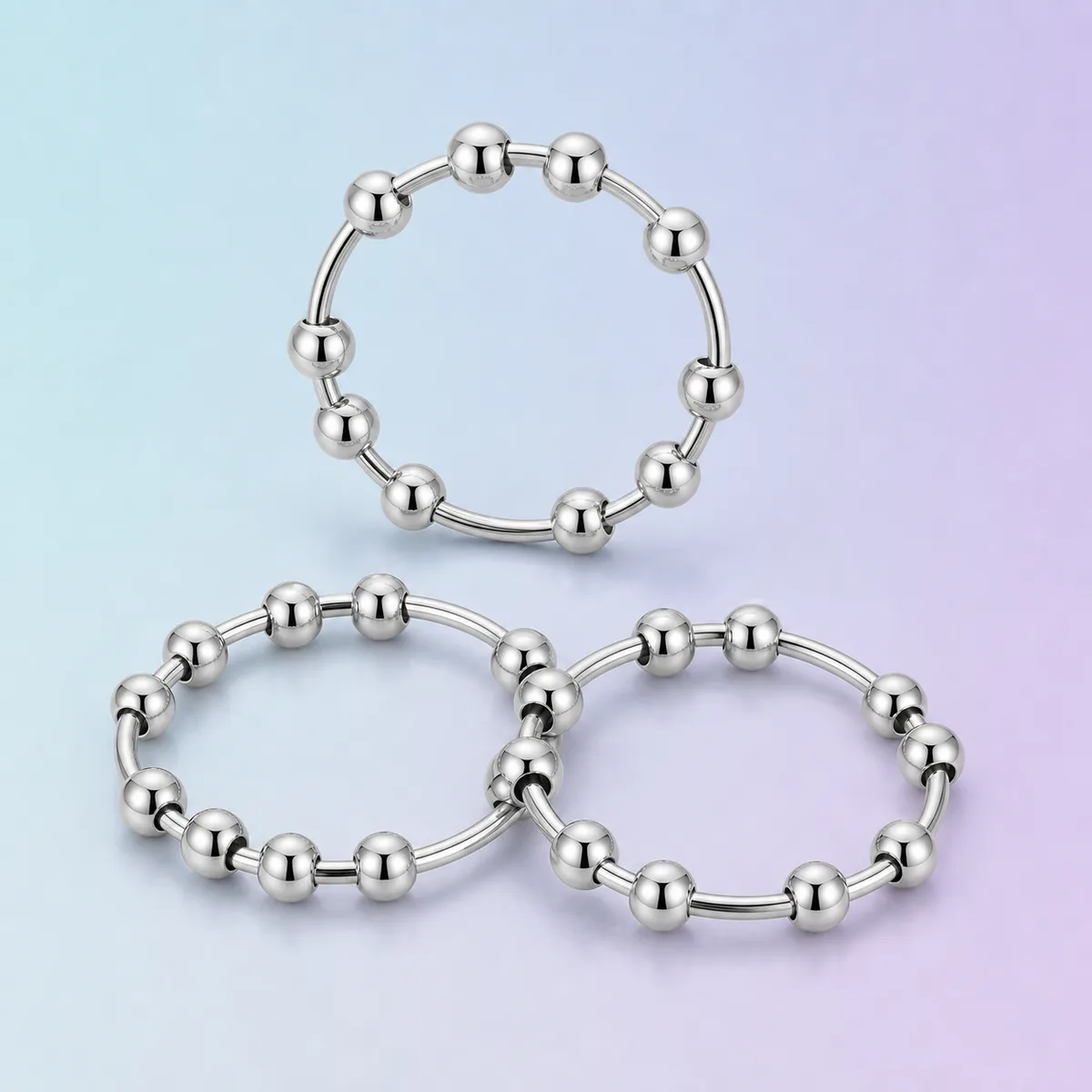
Discretion is about more than volume. It’s also about whether a toy is small, whether it stays in one hand, and whether it looks like a toy at all. A sensory ring you turn on your finger reads as a piece of jewelry; a mesh marble looks like a small object you’re idly holding.
If quiet and subtle is the priority, look at:
- Quiet Spinner Sensory Ring Set (3-Pack): wearable, silent, and easy to use one-handed in a meeting.
- Roll & Squeeze Mesh Marble Fidget: a marble that rolls inside a mesh sleeve; silent and well suited to focus during calls.
- Lumi Jellyfish Crystal Squishy: a slow-rising squishy that’s quiet enough for the desk while you concentrate.
- Jelly Blob Transparent Gel Fidget: silent visual grounding without a single click.
Stress balls are usually quiet too, but the squeeze-and-release motion is a bit more visible, so they shine more at home or at your own desk than in the middle of a presentation. There’s no wrong answer here. It’s about matching the toy to how visible the moment is.
Can fidget and calming toys actually help with focus and stress?
They can help some people some of the time, and the honest answer is that the evidence is mixed and still emerging. Many occupational therapists and organizations like the American Occupational Therapy Association, CHADD, and ADDitude describe fidget and sensory tools as potentially useful supports for self-regulation, while researchers caution that results vary a lot from person to person.
What seems reasonable to say is this: for a lot of people, giving the hands a quiet, repetitive task can take the edge off restlessness or channel nervous energy, which can make it a little easier to sit, listen, or settle. That lived experience is real and worth honoring.
What we won’t claim is that a toy treats anxiety, ADHD, or any condition. Research on sensory regulation suggests these tools may support focus and calm for some individuals, but they aren’t a cure, and they don’t work the same way for everyone. For neurodivergent and sensory-seeking folks, a fidget can be a genuinely helpful part of daily regulation, and that’s a first-class, valid use, not a workaround.
A gentle reminder: if you’re dealing with persistent anxiety, attention difficulties, or any diagnosable condition, a calming toy belongs alongside professional support, not instead of it. Talking with a doctor, therapist, or occupational therapist is the right next step for anything that’s affecting your daily life, and resources from the NHS, CDC, and Child Mind Institute are good, trustworthy starting points.
How do I choose if I still can’t decide between the three?
If you can’t decide, start with the moment you most want help: choose a squishy for winding down, a stress ball for releasing tension, and a gel fidget for quiet focus. When you genuinely want all three, a sampler bundle lets you try each texture and discover what your hands prefer without committing to one type up front.
Most people who think they want ‘one calming toy’ end up with a small rotation: a quiet one for work, a soft one for the nightstand, a squeezy one for the car. That’s normal and a little delightful, not indulgent.
A simple way to decide:
- Name the moment. Bedtime? Meetings? Driving? Studying?
- Pick the matching type. Wind-down to squishy, tension to stress ball, focus to gel or a silent fidget.
- Check the table. Make sure the noise and mess columns fit that setting.
- Trust your hands. If a texture sounds appealing just reading about it, that’s a real signal.
If you’d rather sample first, the Calm Starter Bundle (6-Piece Sensory Kit) is built exactly for this: a spread of textures so you can learn your own preferences. For sharing, gifting, or a classroom, the Mini Mochi Animals Squishy Set (12-Pack) spreads a lot of small calm around. There’s no need to get it perfect on the first try. The right calming toy is simply the one you keep reaching for, calm in the palm of your hand.
Sources & further reading
We reference trusted organizations by name. This article is informational and not a substitute for professional medical advice.
- American Occupational Therapy Association: Occupational therapists describe sensory and fidget tools as potential supports for self-regulation; effectiveness varies by individual.
- CHADD: Describes fidget tools as one possible part of a broader toolkit for attention and self-regulation, not a standalone solution.
- ADDitude: Covers fidget and sensory strategies for focus while noting that responses differ from person to person.
- Child Mind Institute: Frames sensory and fidget tools as supportive aids and emphasizes professional support for diagnosable conditions.
- NHS: General guidance on anxiety and self-help encourages professional support for symptoms that affect daily life.
- CDC: Provides public-health information on children's mental health and when to seek professional evaluation.
Frequently asked questions
What is the difference between a squishy and a stress ball?
A squishy is a soft foam toy that slowly re-inflates after you press it, making it ideal for slow, soothing wind-down. A stress ball is denser and springs back quickly, giving satisfying squeeze-and-release feedback that's better for discharging tension and building a little hand strength.
Are calming toys good for anxiety?
They can help some people feel calmer in the moment by giving restless hands a quiet, repetitive task, and many therapists describe them as useful self-regulation supports. But evidence is still mixed, and they aren't a treatment. For persistent anxiety, use them alongside professional care, not instead of it.
Which calming toy is quietest for the office or classroom?
Gel fidgets, slow-rising squishies, mesh-marble toys, and sensory rings are essentially silent and discreet. Options like the Quiet Spinner Sensory Ring Set, Roll & Squeeze Mesh Marble Fidget, and Jelly Blob Transparent Gel Fidget can be used in meetings or class without drawing attention or making noise.
Are squishies, stress balls, or gel fidgets messy?
All three are low-mess in normal use. Foam squishies can pick up grime, gel fidgets attract lint and pet hair so they prefer a clean desk, and stress balls only become messy if the skin tears and leaks. Squeezing with finger pads instead of nails keeps everything intact.
Which calming toy should I buy if I can't decide?
Match it to your main moment: a squishy for sleep and wind-down, a stress ball for tension release, a gel fidget for quiet focus. If you want to try several textures first, a sampler like the Calm Starter Bundle lets you discover which one your hands naturally prefer.